




What is an acute kidney injury?
An acute kidney injury (AKI), also referred to as acute renal failure, is a sudden decline in kidney function that occurs within hours or days. It is characterized by a rapid reduction in the kidneys' ability to filter waste, balance fluids, and regulate electrolytes. AKI can result from multiple factors, including decreased renal blood flow due to low blood pressure, sepsis, or dehydration. Conditions like chronic kidney disease can increase the risk of AKI, making patients more susceptible to a decline in renal function.
In AKI, waste products such as blood urea nitrogen (BUN) and serum creatinine accumulate, leading to toxicity in the body. Urine output may also decrease, resulting in fluid overload and complications like swelling or shortness of breath. Acute tubular necrosis is a common cause of AKI, where damage to the kidney’s tubules impairs function. Without intervention, AKI can progress to kidney failure or renal failure, requiring treatments like dialysis.
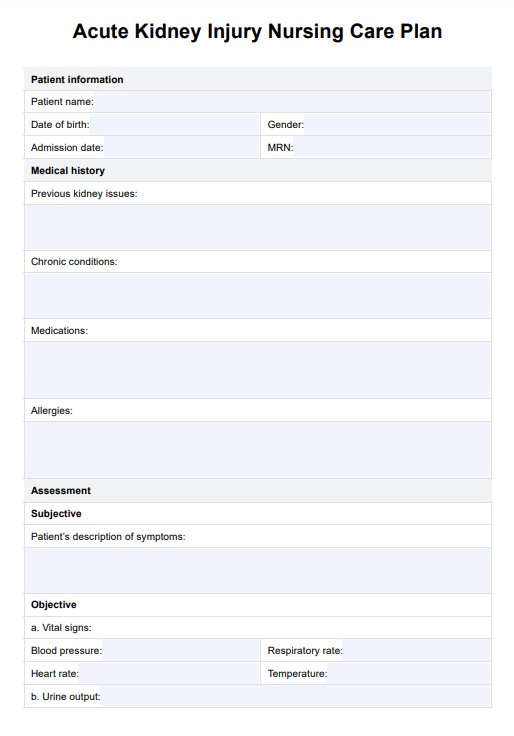
A thorough nursing diagnosis for AKI involves monitoring vital signs, including blood pressure, and assessing lab values like BUN, serum creatinine, and urine output. These measures help guide treatment and prevent further deterioration of kidney function. Early detection and proper management are critical to preventing long-term damage.









