
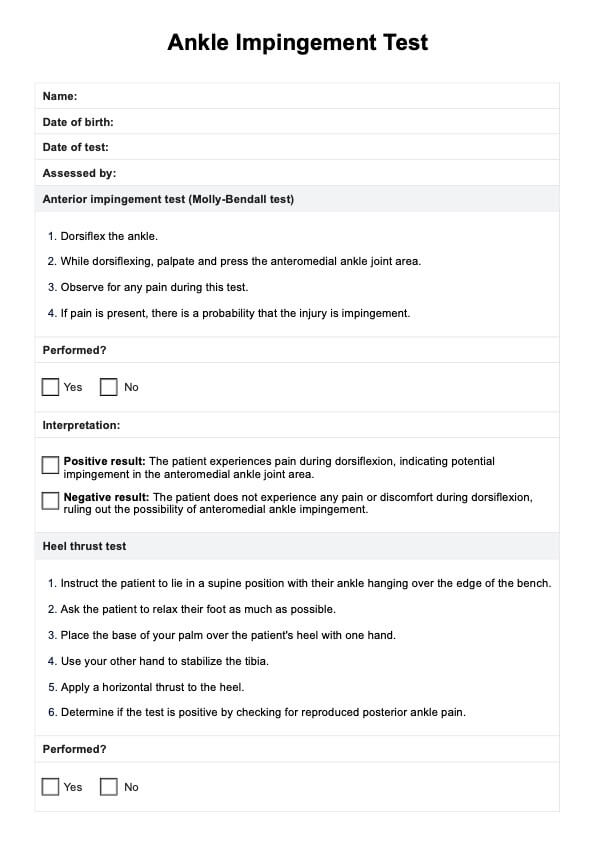




What is ankle impingement syndrome?
Ankle impingement syndrome refers to a condition where soft tissues or bony structures in the ankle are compressed. This compression typically occurs during specific movements, leading to pain and a restricted range of motion. The anterolateral impingement syndrome can manifest in different forms depending on the location of the impingement: anterior ankle impingement, commonly known as "footballer’s or anterolateral ankle impingement," occurs at the front of the ankle, and posterior ankle impingement affects the back of the ankle.
Symptoms of this syndrome
The primary symptom of ankle impingement syndrome is pain in the ankle, particularly when the foot is flexed up or down to extremes. This pain often worsens with activity, especially activities that involve repetitive ankle motion, such as running, jumping, or kicking. Swelling and tenderness over the affected area are also common. In severe cases, the pain may be persistent and can limit daily activities due to the discomfort and reduced ankle mobility.
Causes of this syndrome
Ankle impingement syndrome is typically caused by repetitive trauma or injury to the ankle that leads to the formation of scar tissue or bone spurs. In athletes, especially those participating in sports requiring repetitive ankle use like soccer, basketball, and ballet, such repetitive stress can cause these abnormalities. Anatomical factors such as naturally tight or misaligned joint structures can also predispose individuals to this condition.
Additionally, previous or chronic ankle pain or injuries, such as sprains, can contribute to the development of anterior impingement syndrome by altering the biomechanics of the ankle joint and leading to abnormal rubbing or pressure within the joint.









