




How do nurses diagnose anxiety disorders?
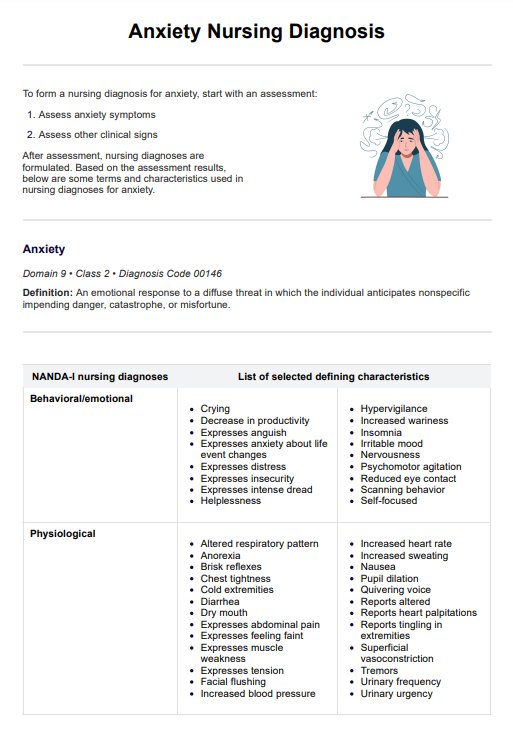
Nurses diagnose anxiety disorders by assessing a patient's anxiety symptoms and identifying related factors that contribute to emotional and physical distress. An anxiety diagnosis typically involves evaluating both physical symptoms and psychological markers, as detailed in NANDA-I's (Herdman et al., 2024) guidelines.
Anxiety disorders, including generalized anxiety disorder (GAD), panic disorder, and major depressive disorder, often involve symptoms like difficulty concentrating, irritability, hypervigilance, and panic attacks. Nurses look for defining characteristics, such as persistent feelings of dread, apprehension, or an intense sense of impending danger, even without an immediate threat. They also monitor the presence of physiological signs like increased heart rate, sweating, or muscle tension, which commonly accompany severe anxiety.
When assessing patients, nurses examine factors that may worsen anxiety symptoms. These can include interpersonal stressors, unresolved conflicts, or unmet needs. Additionally, nurses consider the patient's cognitive and emotional state, noting behaviors like hypervigilance, nervousness, or rumination, which often signal an anxiety disorder. Nurses rely on functional health patterns to collect data accurately, ensuring a comprehensive view of the patient’s mental and physical state.
Nursing interventions may include strategies to help patients manage anxiety, such as guiding relaxation techniques or providing education on anxiety management. In some cases, nurses collaborate with other healthcare professionals to suggest anti-anxiety medications as part of the treatment plan. Assessments are ongoing, and if mental health complications such as major depressive disorder or substance misuse are present, nurses adjust their approach accordingly to offer holistic care.
Examples of nursing diagnoses for anxiety
When diagnosing anxiety disorders, nurses assess both physical and cognitive symptoms that reflect the patient’s distress. These symptoms help identify the severity of anxiety and guide appropriate nursing interventions. Below are some examples of nursing diagnoses based on the observed signs and symptoms of anxiety (Cumpian, 2023):
- Anxiety related to perceived threat, evidenced by restlessness and tense appearance
- Anxiety related to chest pain secondary to heart failure, as evidenced by diaphoresis and crying
- Anxiety related to impending surgery, as evidenced by restlessness and angry outbursts









