
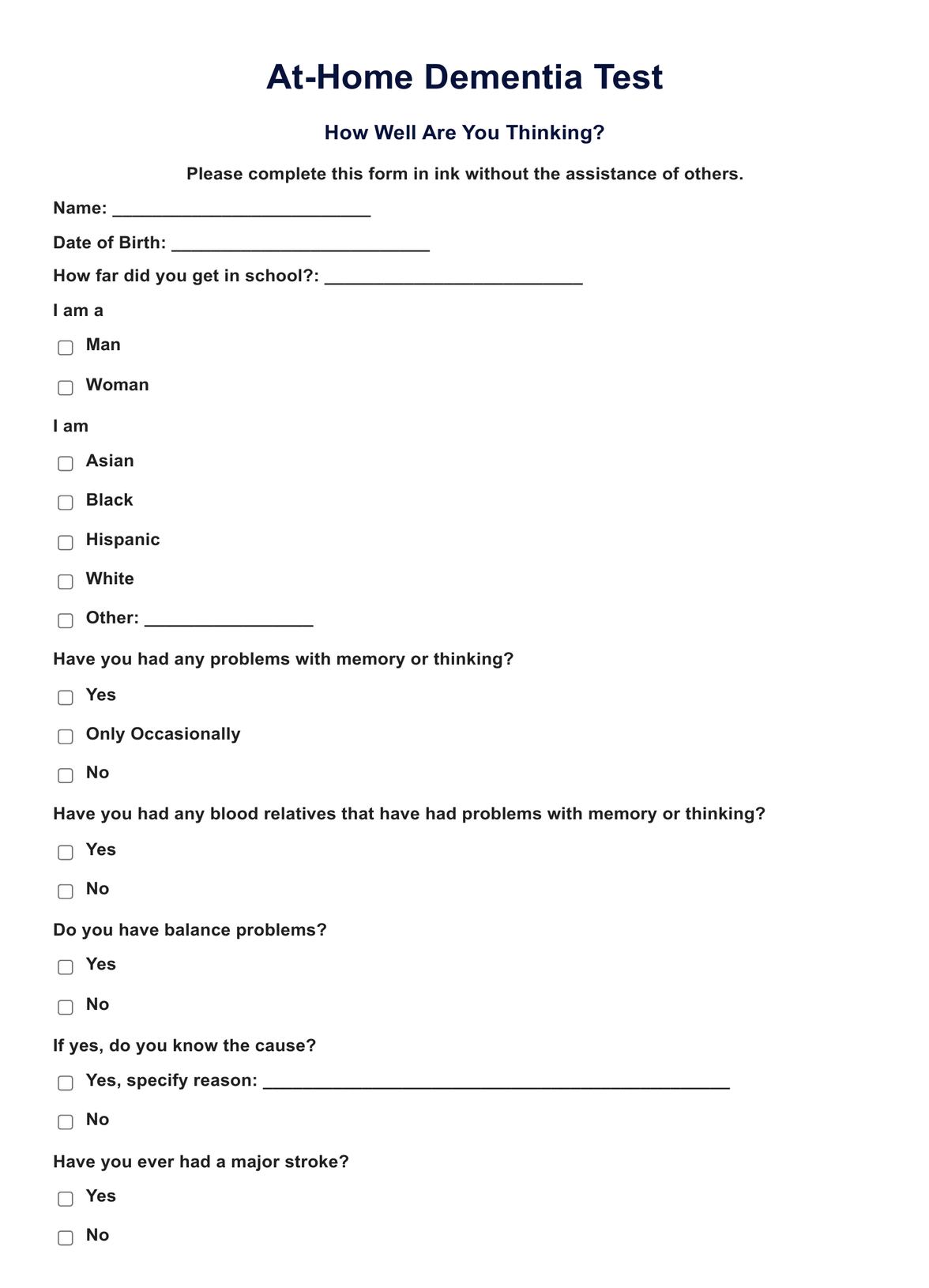




What is a dementia test?
Commonly known as a cognitive assessment or screening, a dementia test is a series of evaluations designed to assess an individual's cognitive functioning and identify potential signs of dementia or other cognitive disorders. These tests are typically administered by healthcare professionals, such as doctors or neuropsychologists, and aim to evaluate various aspects of cognitive neurology and ability.
The specific components of a dementia test may include:
- Memory tests: Assessing short-term and long-term memory by asking the individual to recall information or perform memory-related tasks.
- Attention and concentration tests: Evaluating the ability to focus and sustain attention, often through tasks like counting backward or performing repetitive activities.
- Language tests: Assessing language skills, including vocabulary, comprehension, and the ability to express thoughts verbally or in writing.
- Visuospatial skills tests: Evaluating the ability to perceive and interpret visual information, such as spatial relationships and object recognition.
- Executive functioning tests: Assessing higher-level cognitive functions, including problem-solving, planning, and organization.
- Orientation tests: Checking awareness of time, place, and person, which can be affected in individuals with cognitive disorders.
These tests are structured to detect cognitive impairments, and the results can help healthcare professionals determine the severity of cognitive decline, diagnose the specific type of dementia (if present), and guide appropriate interventions or treatment plans.
It's important to note that a dementia test is not a definitive diagnosis but rather a tool to identify potential cognitive issues. A comprehensive diagnosis of dementia often involves a combination of clinical assessments, medical history reviews, imaging studies (such as brain scans), and laboratory tests administered by a primary care physician.
It is recommended that individuals experiencing cognitive changes or their caregivers seek professional medical advice if they have concerns about dementia. Early detection and intervention can be crucial for managing symptoms and improving the quality of life for individuals with cognitive disorders.









