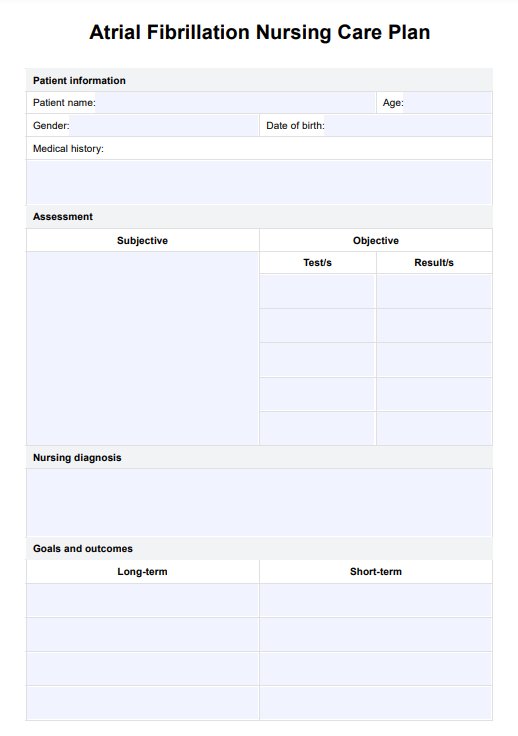
Components of an effective nursing care plan for AFib
An effective nursing care plan for AFib is essential to ensure the safety and well-being of patients. This plan should encompass the following key components:
Assessment
The initial assessment for atrial fibrillation involves a comprehensive evaluation of the patient's health status, focusing on both subjective and objective data. Nurses should review the patient's medical history, paying close attention to any underlying conditions that may contribute to AFib, such as hypertension, heart disease, or hyperthyroidism.
It’s also important to assess the patient's symptoms, including palpitations, shortness of breath, or chest pain. Additionally, nurses should inquire about the patient's history of stroke, heart attacks, or thromboembolic events, as these can increase the risk associated with AF. Vital signs, including heart rate and rhythm and complete blood count, should be carefully assessed, and any irregularities should be documented.
Nursing diagnosis
After completing the assessment, nurses should analyze the data to determine appropriate nursing diagnoses. These should specifically address the risk factors associated with atrial fibrillation, guiding the creation of relevant interventions.
Common nursing diagnoses may include:
- Risk for decreased cardiac output related to impaired atrial filling and increased risk of thromboembolism.
- Impaired gas exchange related to decreased cardiac output or pulmonary congestion.
- Knowledge deficit related to AFib diagnosis, treatment options, and self-care management.
Goals and outcomes
The care plan should outline both short-term and long-term goals to monitor the patient's progress and assess the effectiveness of interventions. Goals need to be specific, measurable, achievable, relevant, and time-bound (SMART).
For instance, a short-term goal could be to achieve a stable heart rate and rhythm within 24 hours through pharmacological interventions. A long-term goal may be to prevent AFib recurrence by educating the patient on lifestyle modifications, such as managing stress and maintaining a healthy weight.
Interventions
Nursing interventions for patients with atrial fibrillation should focus on promoting optimal heart function and preventing complications. Actions may include:
- Providing education on lifestyle modifications, such as dietary changes, exercise, and smoking cessation.
- Administering prescribed anticoagulants or antiarrhythmic medications and monitoring for side effects.
- Conducting regular assessments of heart rhythm and vital signs.
- Collaborating with the healthcare team to develop a comprehensive management plan tailored to the patient's needs.
Involving patients in their care plan is vital, empowering them to take an active role in managing their condition.
Rationale
Understanding the rationale behind each intervention is crucial for effective patient care. Evidence-based practices should guide nursing actions.
For example, educating patients about the importance of anticoagulation therapy is vital, as it helps prevent strokes by reducing the risk of thrombus formation. Additionally, encouraging lifestyle changes can improve overall cardiovascular health.
Evaluation
The final step in the nursing care plan for atrial fibrillation is evaluation. Nurses should consistently assess the patient's response to the implemented interventions and make necessary adjustments.
Collaboration with other healthcare professionals, including cardiologists and pharmacists, is essential for a coordinated approach to patient care. Regular follow-ups and patient education should also be prioritized to ensure ongoing management of atrial fibrillation and prevention of complications.