
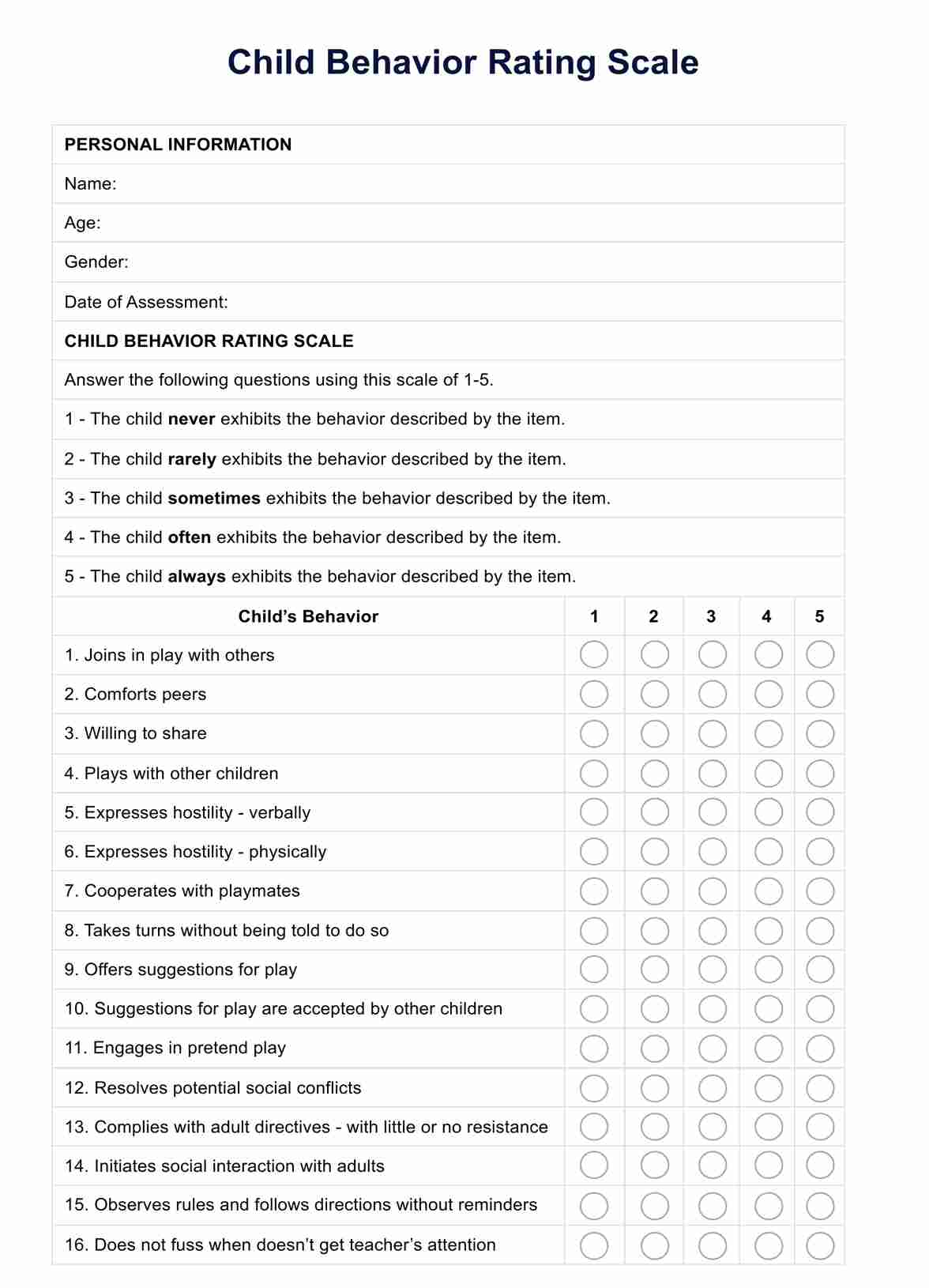




What are Behavior Rating Scales?
As the name suggests, Behavior Rating Scales are used to rate or evaluate specific behaviors. They are typically used by mental health professionals, educators, and caregivers to assess various aspects of an individual's emotions, behaviors, and abilities. These scales may range from evaluating general behaviors such as social skills and attention span to more specific behaviors related to mental disorders like ADHD or depression. They are designed with a series of questions or statements, and responses are selected based on a set scale.
Behavior Rating Scales can be used in various settings:
- Clinical: Mental health professionals often use these scales to support the diagnostic process or track clients' progress throughout treatment.
- Educational: Educators can use these scales to identify and address behavioral issues, learning disorders, or developmental delays in students. This can include teacher rating scales and an educational behavior assessment system.
- Research: Researchers may use these scales to investigate connections between behaviors and other variables, like genetic factors or environmental influences.
These scales are meant to gather information about an individual's behavior in all of these contexts — they are not standalone diagnostic tools. Professional judgment is still crucial in interpreting these ratings and deciding based on the results.
Practitioners also use two main types of scales to understand and evaluate behaviors comprehensively. Each type serves a unique purpose and caters to specific assessment needs.
Broad band rating scales
Broad-band rating scales are designed to provide a wider view of an individual's behavioral and emotional functioning. These scales cover a broad spectrum of potential issues or disorders, effectively assessing a range of emotional and behavioral domains simultaneously. This includes looking into both internalizing behaviors (like anxiety and depression) and externalizing behaviors (such as aggression or hyperactivity).
Given their extensive scope, these scales are quite detailed, sometimes featuring up to 500 items. They are a go-to choice for those seeking an overall assessment of social-emotional functioning to gather more comprehensive information.
Narrow band rating scales
On the other end of the spectrum, narrow-band rating scales offer a closer, more focused examination of behaviors. These scales zero in on specific problem areas or syndromes. Narrow-band scales can provide a detailed analysis of targeted symptoms or behaviors by concentrating on particular aspects of behavior. It usually breaks down the evaluation into focused domains, including problem behaviors and social skills, to give a clear picture of the behaviors related to the specific area of concern.









