
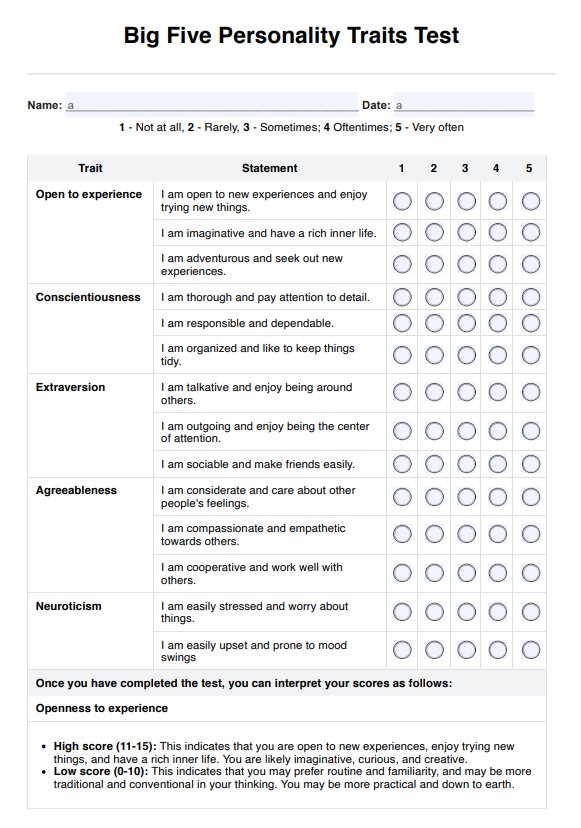




What is a Big 5 Personality Test?
The Big Five Personality Test stands out as a powerful tool in personality assessment. This broad-used assessment offers valuable insights for healthcare professionals, helping them understand individual patients more deeply. This guide explores the core principles of the Big Five and its applications within healthcare settings.
The Big Five, also known as the OCEAN model, assesses personality over five broad dimensions:
- Openness to experience: This dimension explores a person's curiosity, imagination, and intellectual engagement. Open individuals are drawn to new experiences and enjoy exploring novel concepts.
- Conscientiousness: This trait delves into an individual's organization, self-discipline, and goal-oriented approach. Conscientious individuals are typically reliable, dependable, and meticulous in their planning.
- Extraversion: This dimension explores sociability, talkativeness, and assertiveness. Extraverted individuals tend to be energetic and outgoing and enjoy social interaction.
- Agreeableness: This trait reflects cooperation, empathy, and a desire to please others. Agreeable individuals are often trustworthy and helpful and value maintaining harmonious relationships.
- Neuroticism: This dimension explores emotional stability and the tendency to experience anxiety and negative emotions. People with high neuroticism are prone to worry, stress, and mood swings.
The Big Five Personality Test is a valuable tool for healthcare professionals, offering a deeper understanding of human personality traits and personality differences. By integrating this knowledge into their practice, healthcare professionals can create a more holistic and patient-centered approach to care.









