
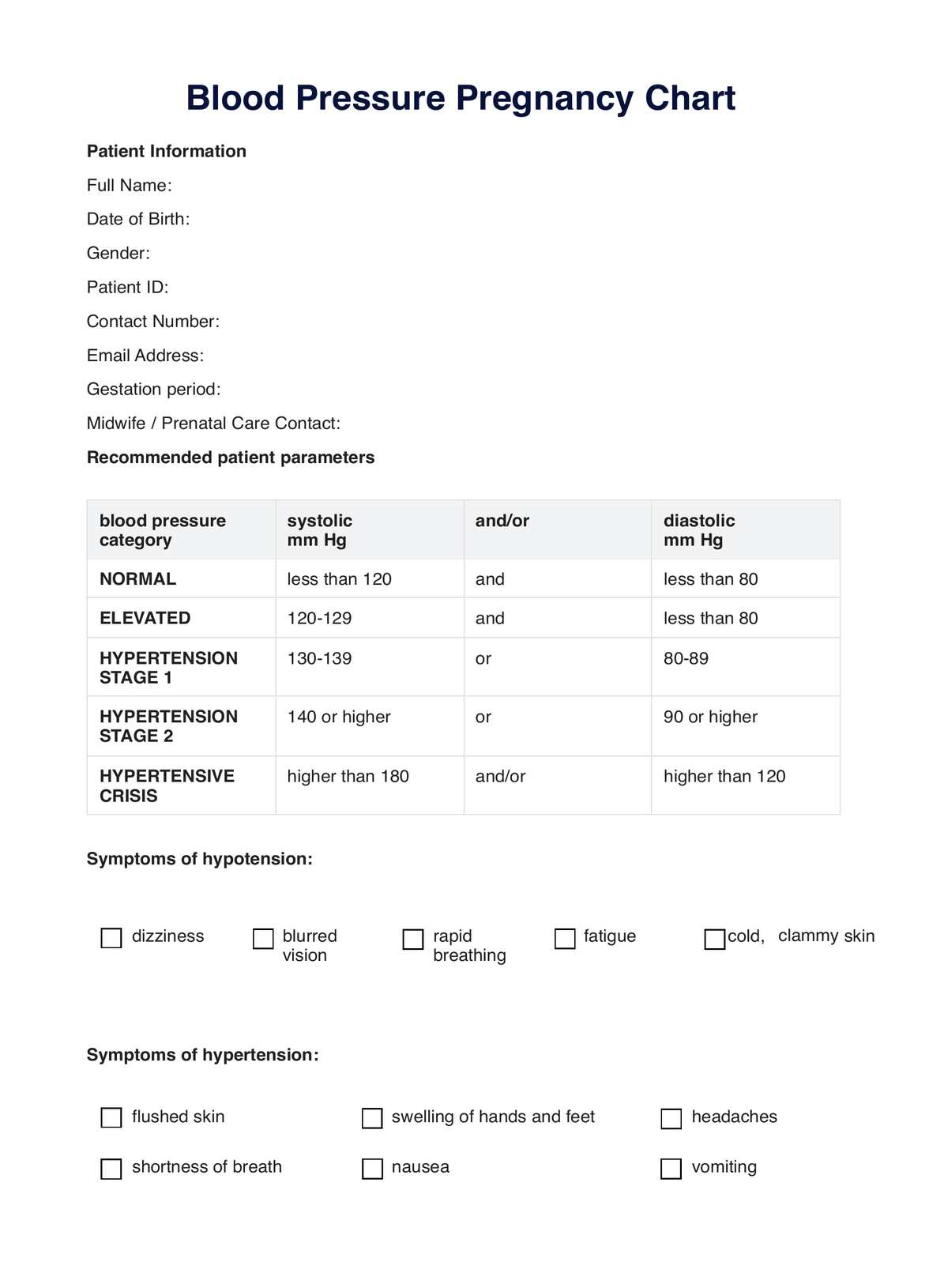




What is a Blood Pressure Pregnancy Chart?
Throughout pregnancy, the body undergoes significant changes to accommodate the growth and development of the fetus. Maintaining a regular blood pressure reading during these nine months is crucial. Blood pressure measures the force of blood against artery walls in two values. The systolic number indicates the arterial pressure during the heartbeats, whereas diastolic indicates the pressure between heartbeats. Elevated pressure can lead to high blood pressure readings, known as hypertension, while decreased pressure may result in low blood pressure readings, known as hypotension.
The presence of hypertension during pregnancy is a cause for concern and requires close monitoring, as the potential risks can cause significant damage. Chronic hypertension, chronic hypertension with superimposed preeclampsia, gestational hypertension, and preeclampsia are all high blood pressure issues associated with pregnancy.
The utilization of a blood pressure pregnancy chart is common and essential in the delivery of safe and effective care for pregnant patients. By collating regular blood pressure results, a clear picture can be formed by analyzing the results against the recommended parameters. Abnormal blood pressure is known as a silent killer for its damaging risks yet undetectable symptoms. Therefore, regular charting of blood pressure measurements and applying any necessary medical interventions is paramount.
Blood pressure is typically categorized into five sections to help define parameters and severity, these remain the same for pregnant patients but may present different risks and symptoms compared to non-pregnant patients:
- Normal: Less than 120/80 mm Hg
- Elevated: Systolic between 120 and 129 mm Hg and diastolic less than 80 mm Hg
- Stage 1 hypertension: Systolic between 130 and 139 mm Hg or diastolic between 80 and 89 mm Hg
- Stage 2 hypertension: Systolic at least 140 mm Hg or diastolic at least 90 mm Hg
- Hypertensive Crisis: Exceeds 180 mm Hg systolic and 120 mm Hg diastolic.









