




What are cervical spine injuries?
Cervical spine injuries involve the seven vertebrae in the neck. These injuries range from mild strains and sprains to severe dislocations like a cervical spine fracture. Cervical fractures are particularly serious and can significantly impact a person's health and mobility.
Causes
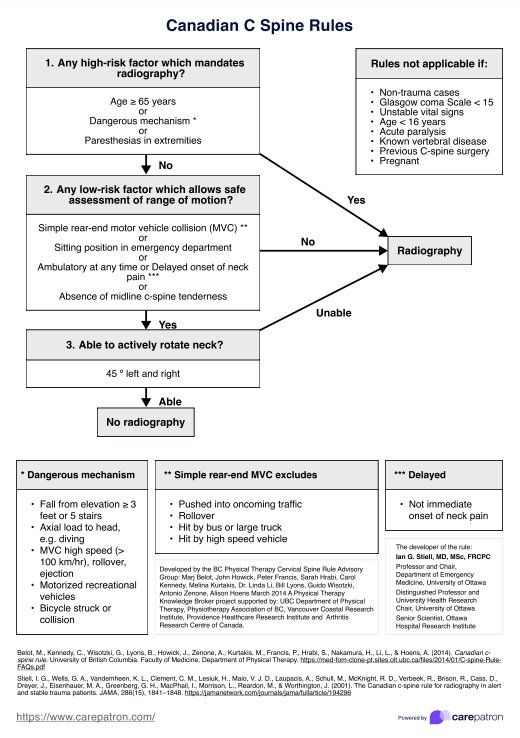
In emergency medicine, cervical fractures often result from blunt trauma due to high-energy incidents such as car accidents, falls from significant heights, sports injuries, or diving accidents. Conditions like osteoporosis, which weakens bones, can also make individuals more susceptible to fractures from minor falls or movements.
Symptoms
Symptoms can vary widely depending on the severity and location of the injury. Common symptoms include severe neck pain, tenderness, and swelling. Affected individuals may experience limited neck motion, muscle weakness, and numbness or tingling in the arms or legs.
In severe cases, cervical fractures can lead to spinal cord injuries, resulting in partial or complete paralysis, difficulty breathing, and loss of bladder or bowel control.
Treatment and management
Prompt medical evaluation and treatment are crucial to prevent further damage and optimize recovery. Treatment may include immobilization with a cervical collar, pain management, physical therapy, and possibly surgical intervention to stabilize the spine and prevent neurological complications.









