




What is cervicogenic dizziness?
Cervicogenic dizziness is a condition characterized by dizziness or vertigo originating from neck issues, particularly those involving the cervical spine. This type of dizziness is typically associated with neck pain and can be triggered or worsened by neck movements. The exact mechanism is not fully understood, but it involves dysfunctional sensory inputs from the cervical spine to the central nervous system, which disrupts the body's normal balance and orientation systems.
Causes and symptoms
The causes of cervicogenic dizziness often relate to disorders of the neck, which can arise from whiplash, cervical spine degeneration, or other neck injuries that affect the joints, muscles, or nerves of the cervical spine. Symptoms usually include a spinning sensation or imbalance exacerbated by moving the neck. This dizziness often accompanies other neck-related symptoms, such as limited range of motion, neck pain, and sometimes headaches.
Comparing Cervical Torsion Test and BPPV diagnosis
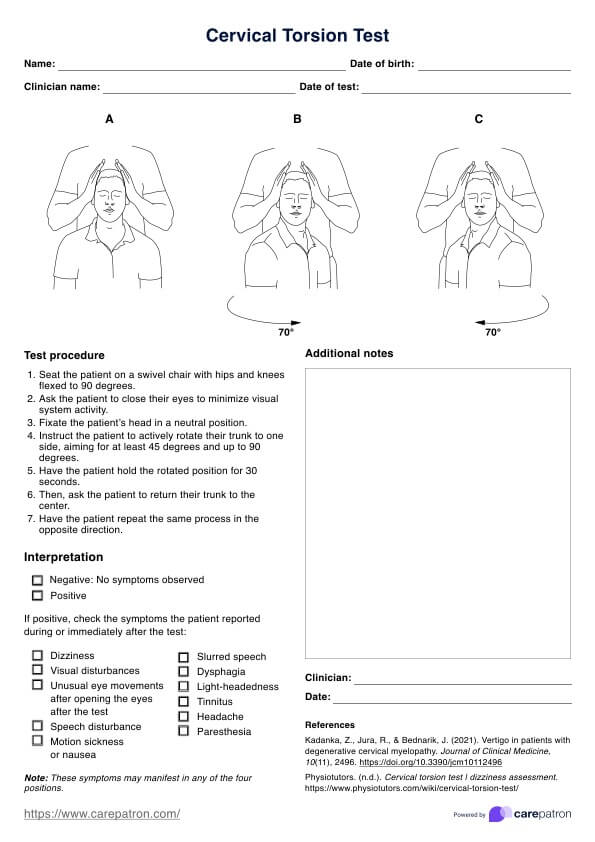
The Cervical Torsion Test is essential for diagnosing cervicogenic dizziness by isolating the cervical spine's movement to see if it induces symptoms. This contrasts with diagnosing benign paroxysmal positional vertigo (BPPV), which involves the Dix-Hallpike maneuver. BPPV is characterized by brief episodes of dizziness caused by head position changes, linked to displaced crystals within the inner ear. While the Cervical Torsion Test evaluates the neck's role in dizziness by observing symptoms upon neck movement, BPPV testing specifically looks for dizziness triggered by particular head movements, helping to distinguish between the two conditions based on the origin and trigger of the symptoms.
How to diagnose cervicogenic dizziness
Diagnosing cervicogenic dizziness involves a detailed assessment to rule out other causes of dizziness and vertigo. The diagnostic process includes a thorough medical history, physical examination, and possibly imaging studies like MRI or X-rays if a cervical spine pathology is suspected. One specific test used in the diagnosis is the Cervical Torsion Test, which evaluates the contribution of the cervical spine to the dizziness experienced by the patient.









