
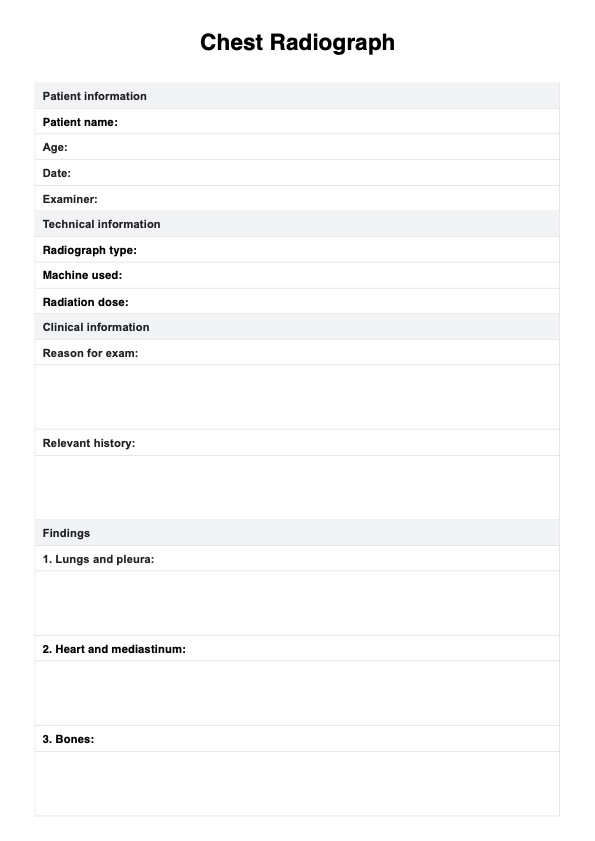




What is a Chest Radiograph?
A Chest Radiograph commonly known as a chest X-ray, is a diagnostic imaging test that uses a small amount of ionizing radiation to produce images of the structures inside the chest, including the heart, lungs, airways, blood vessels, and bones of the spine and chest area. This test is one of the most common imaging tests performed due to its effectiveness in diagnosing, monitoring, and treating various conditions affecting the chest.
Purpose
The primary purpose of Chest Radiography is to evaluate the chest organs and structure, aiding in diagnosing conditions affecting the lungs, heart, and chest wall. It is particularly useful in detecting pneumonia, heart failure, emphysema, lung cancer, and other medical conditions.
Chest X-rays also help assess symptoms such as cough, shortness of breath, or chest pain. These can identify cardiac abnormalities, including an enlarged heart, which may indicate congestive heart failure or other heart diseases.
When to perform a Chest Radiograph
A Chest Radiograph is typically performed when a patient presents symptoms of a chest infection, persistent cough, chest pain, injury, or difficulty breathing. It is also used as a routine diagnostic tool for pre-surgical preparation or to monitor the progression of diagnosed diseases such as tuberculosis or heart failure.
Additionally, healthcare providers may order a chest X-ray to check the placement of devices like pacemakers or catheters. For detailed protocols on assessing chest pain, you can download our Chest Pain Workup template, designed to assist healthcare providers in systematic evaluation.
How to perform a Chest Radiograph
Performing a Chest Radiograph involves positioning the patient either standing or sitting in front of an X-ray machine. The patient is usually asked to hold their breath while the X-ray image is taken to avoid blurring. Two views, a frontal view, and a lateral view, are typically taken for a complete assessment. The procedure is quick, usually lasting only a few minutes, and does not require any special preparation. The radiologist then reviews the X-ray image and provides a detailed report on the findings.









