




What is the Child Dissociative Checklist?
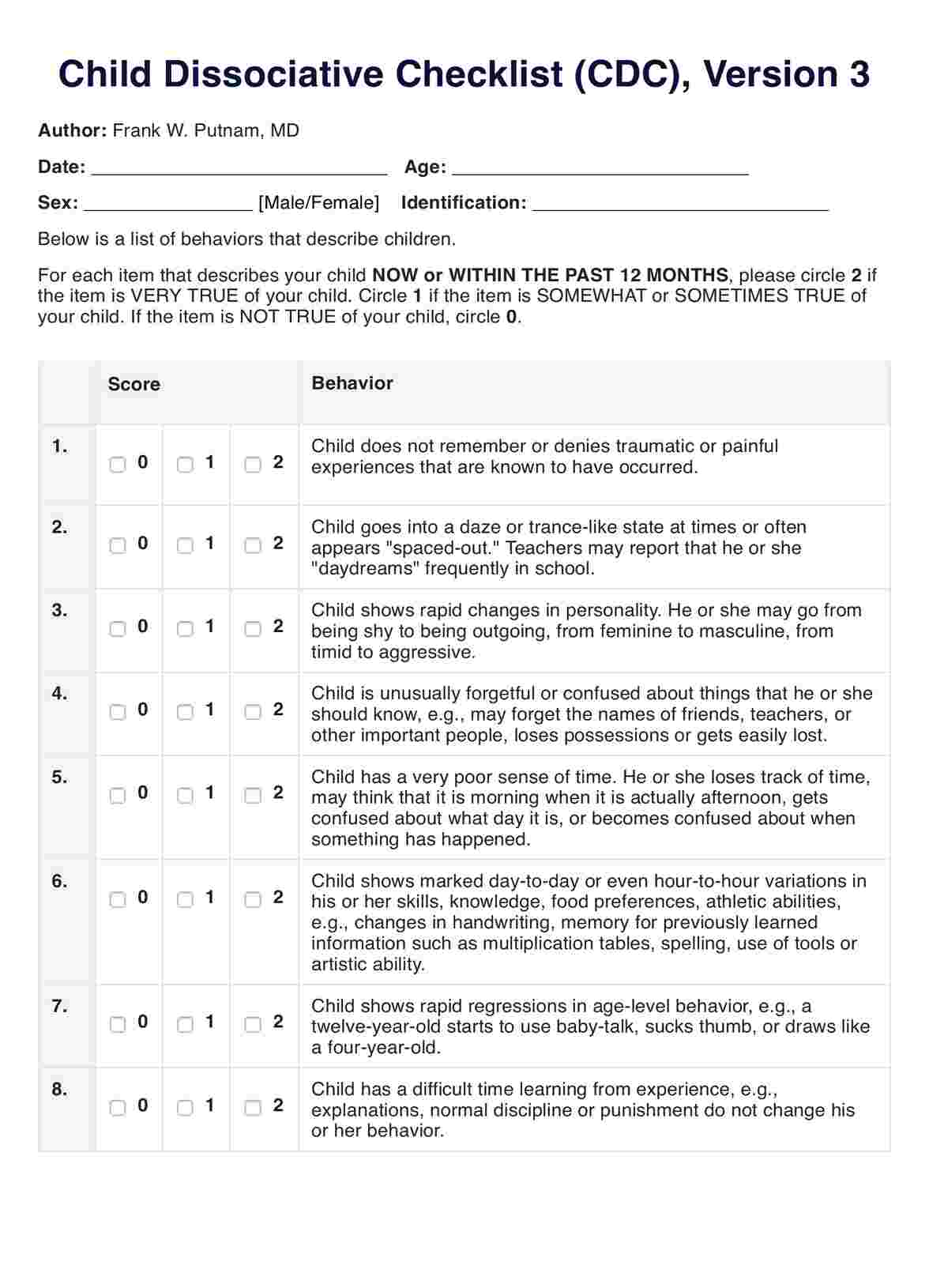
The Child Dissociative Checklist, often abbreviated as CDC, is a specialized psychological assessment tool designed to identify signs of dissociative disorders in children. Developed by experts in child psychology and psychiatry, this checklist is a crucial resource for clinicians, therapists, and mental health professionals working with children who may exhibit symptoms of dissociation.
Dissociative disorders in children often manifest as a disruption in the normal integration of consciousness, identity, memory, and perception. These disturbances can significantly impact a child's emotional well-being and daily functioning. The Child Dissociative Checklist serves as a structured method to evaluate these complex symptoms, enabling early detection and intervention.
The checklist comprises a series of statements or questions focusing on behaviors, emotions, and experiences commonly associated with dissociative disorders. These can include memory lapses, episodes of trance-like states, sudden changes in behavior or skills, and the presence of alternate identities or imaginary companions. Mental health professionals use the checklist to rate the frequency and intensity of these symptoms, based on observations and reports from both the child and caregivers.
Scoring and interpretation of the CDC are nuanced. The checklist is designed not just to capture the presence of symptoms but to gauge their severity. Higher scores typically indicate a greater likelihood or severity of dissociative symptoms, guiding clinicians toward further diagnostic evaluation or therapeutic interventions.
It's important to note that the Child Dissociative Checklist is not a standalone diagnostic tool. Instead, it is used in conjunction with other assessments and clinical evaluations. Its primary role is to guide mental health professionals in identifying children who may need more comprehensive psychological evaluations and to initiate discussions about potential therapeutic pathways. By facilitating early detection, the CDC plays a vital role in ensuring children receive appropriate and timely care for dissociative disorders.









