
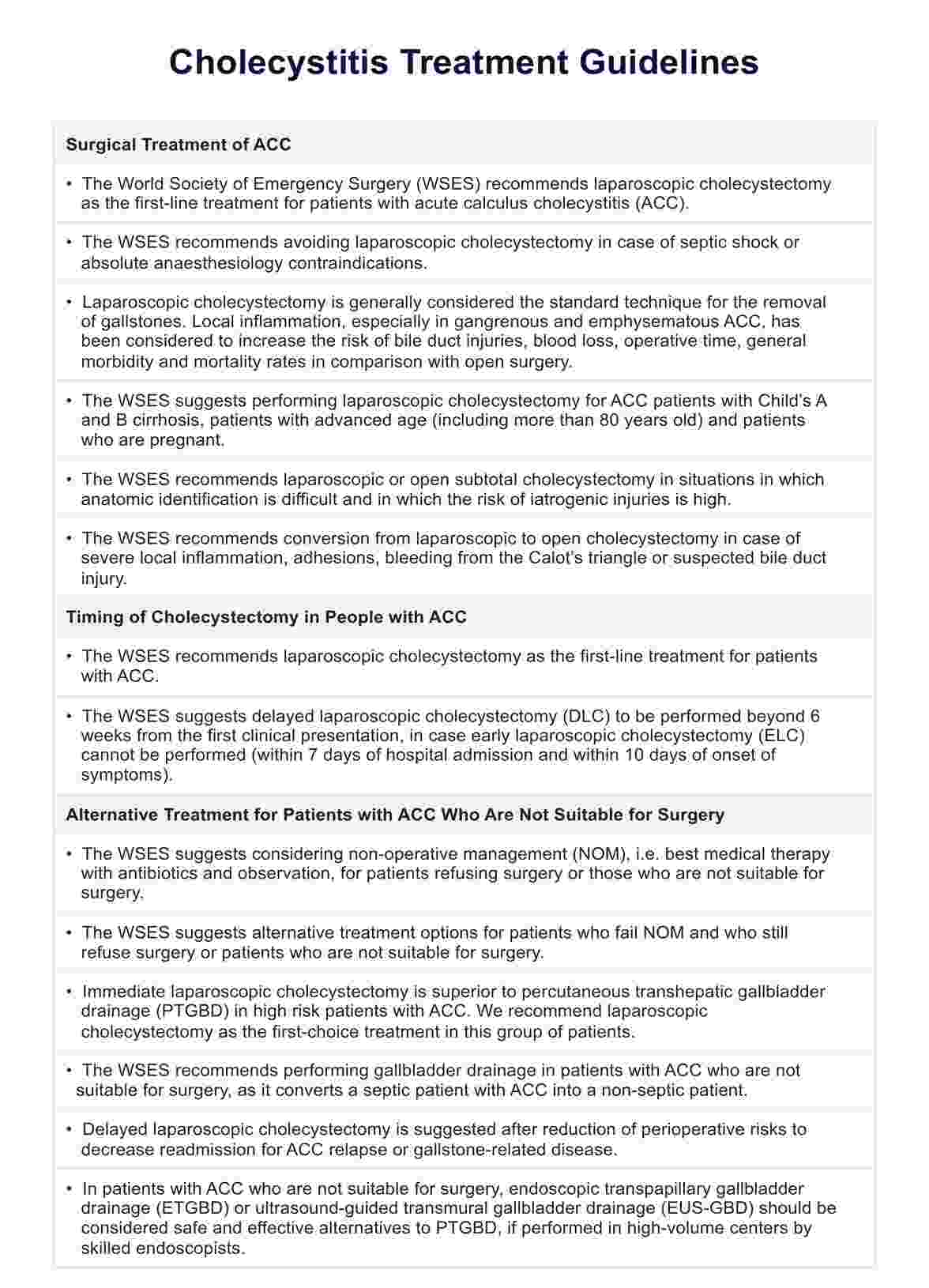




What is cholecystitis?
Cholecystitis is an inflammation of the gallbladder, a small organ located beneath the liver that stores bile, a fluid liver producer to digest fats. This condition is often caused by gallstones blocking the two common bile duct/s leading out of the gallbladder, leading to bile buildup and inflammation. However, cholecystitis can also occur from bile duct problems, tumors, or infections—even without gallstones.
Check out our resources for a comprehensive nursing care plan template for cholecystitis.
Types
There are several types of cholecystitis, including:
- Acute cholecystitis: This sudden inflammation, often resulting from gallstones blocking the cystic duct, includes a specific condition known as acute calculous cholecystitis—where the presence of gallstones directly causes the inflammation. Special considerations are required for patients with ACC, as they may experience more severe symptoms and complications.
- Chronic cholecystitis: This form results from repeated episodes of acute cholecystitis or long-term gallbladder inflammation. It can lead to a thickened gallbladder wall and decreased function over time.
- Acalculous cholecystitis: This type occurs without gallstones and is less common. It can happen in critically ill patients, often due to decreased blood flow or infection, and tends to be more severe.
Each type of cholecystitis has its treatment approach, ranging from medication and lifestyle changes to surgical removal of the gallbladder.









