
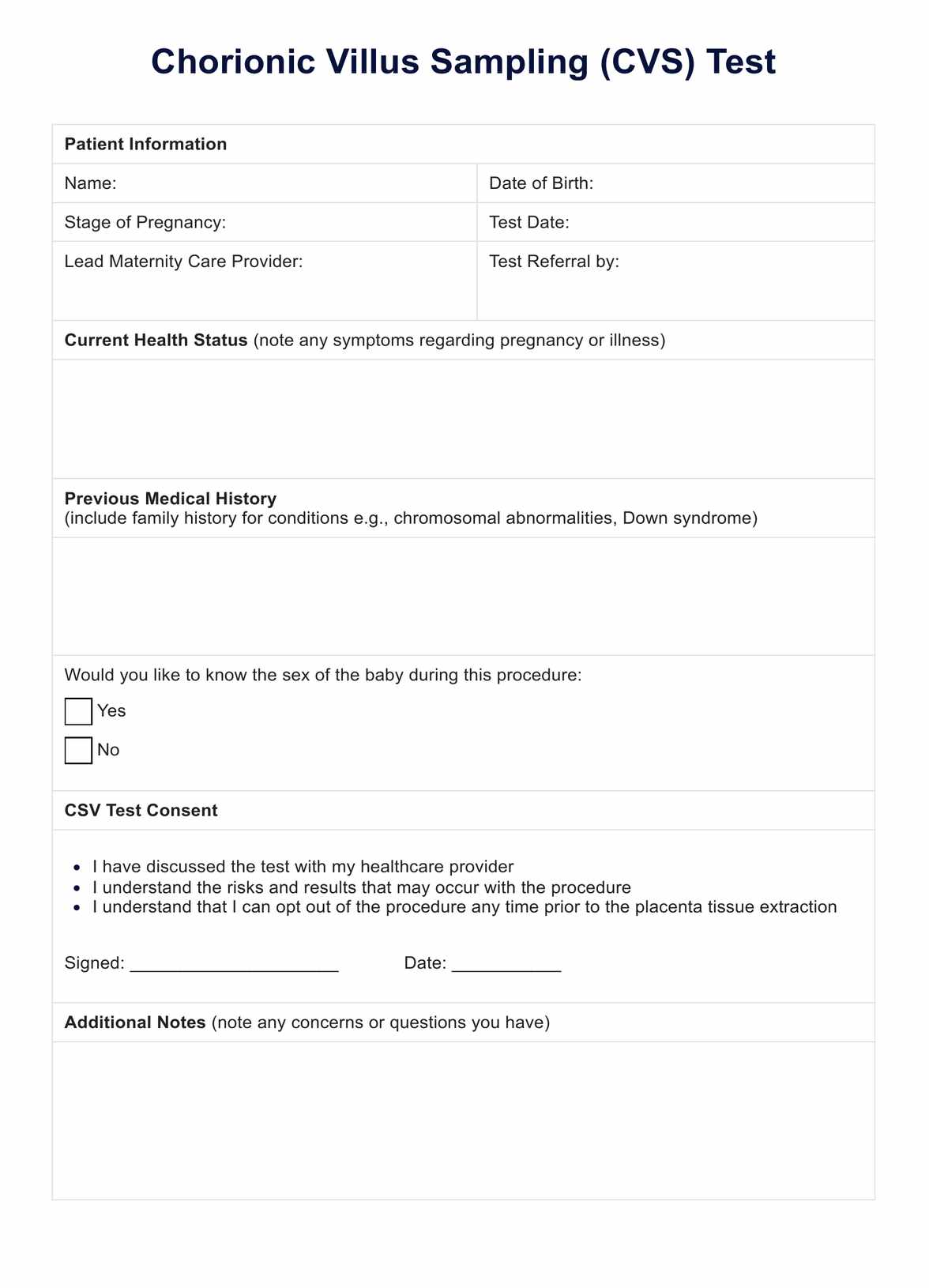




What is a Chorionic Villus Sampling (CVS) Test?
A chorionic villus sampling (CVS) test is a prenatal test for diagnosis of chromosomal defects and other genetic abnormalities such as Down syndrome. The test involves extracting a tissue sample from the placental tissue, usually occurring between weeks 10 and 12 during pregnancy. CVS testing is conducted upon referral from health practitioners, such as general practitioners and midwives, for pregnant women who may be at risk of giving birth to a baby with genetic defects.
The placenta is the pregnancy organ that provides blood supply and ongoing nourishment to the unborn baby. This prenatal testing requires placental tissue, formed by chorionic villi projections. These chorionic villi are thread-like structures developed during fertilization, usually containing the same genes as the fetus.
There are two ways a practitioner may conduct a CVS test:
- Transcervical testing inserts a catheter through the vaginal opening, using ultrasound scanning to move the device toward the placenta to gather chorionic villus samples.
- Transabdominal testing uses ultrasound scanning to insert a thin needle through the abdomen and cervix towards the placenta, gathering a small sample. This procedure may involve local anesthesia to remove discomfort.
During the genetic testing process, vital signs and heart rate will be assessed, and the sex of the baby may also be determined and revealed if the individual wishes.
Following the prenatal test, it usually takes 10 to 14 days before results are determined. Once they are finalized, the genetic counselor will discuss the results, including any implications in case the fetus does have a genetic condition. If this is the case, you can seek guidance about how you would like to proceed from your genetic counselor, partner, or healthcare provider.









