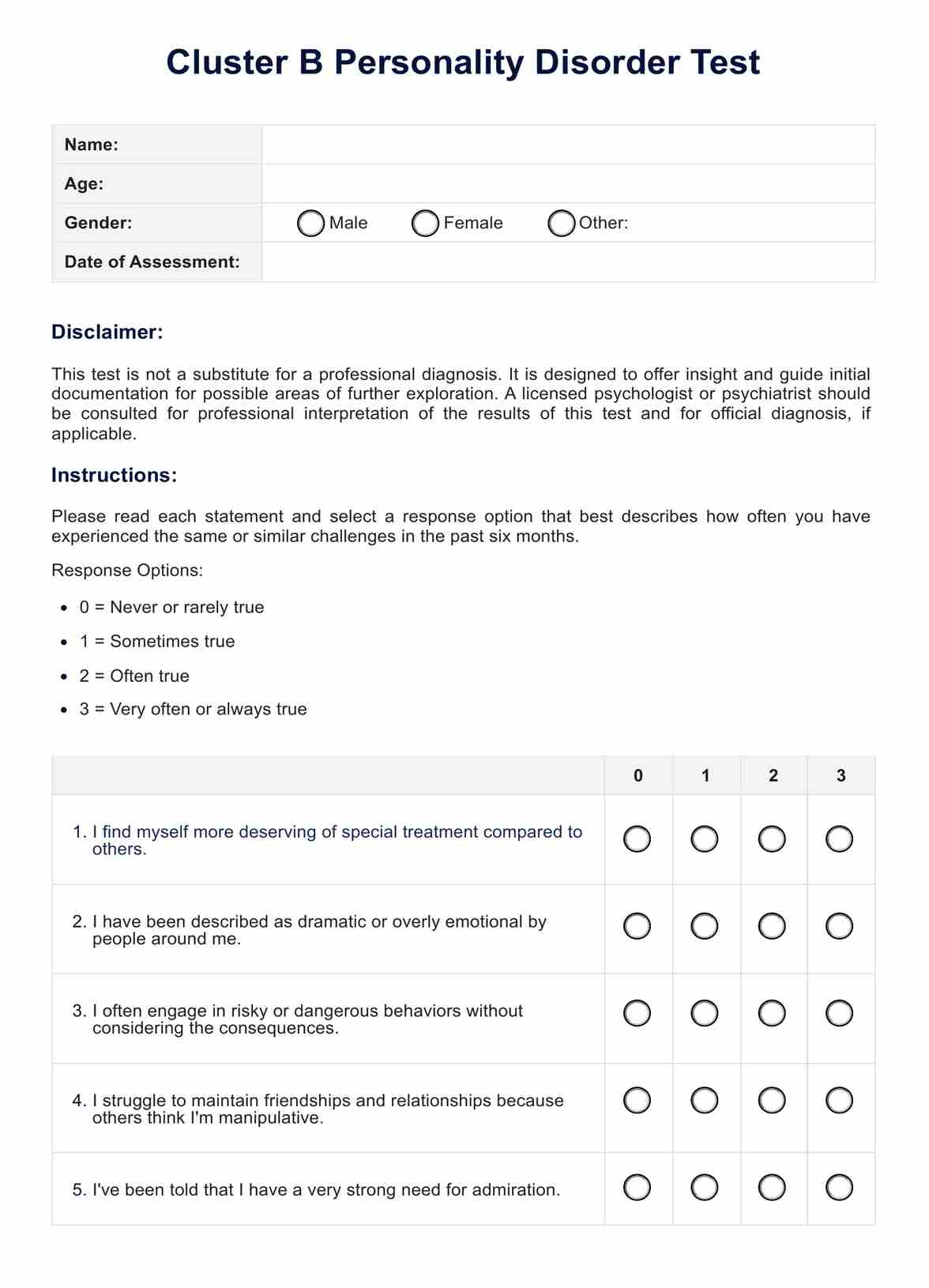
How do mental health care professionals diagnose such disorders?
Diagnosing Cluster B personality disorders represents a significant challenge that requires both precision and sensitivity. For a mental health professional, the process from initial assessment to a definitive diagnosis involves using multiple tools and considering different aspects of the individual's experience.
First, it is important to fully understand the current framework of the Diagnostic and Statistical Manual of Mental Disorders (DSM-5 or DSM-5-TR). This resource is the cornerstone for diagnosing personality disorders as it outlines specific criteria for each disorder.
A comprehensive clinical assessment should then support this. This involves thoroughly exploring the patient's mental health history, interpersonal relationships, and emotional and behavioral patterns. A licensed mental health professional could then use a combination of interviews, self-report questionnaires, psychological tests, and sometimes informant reports, taking care to gather a deeper understanding of the individual's experiences.
Following this, the diagnostic process also considers the following:
Ruling out other conditions
Initially, it's crucial to differentiate symptoms of Cluster B personality disorders from those of other mental health conditions, such as mood disorders, anxiety disorders, or other personality disorders. Comorbid conditions are common, adding layers to the diagnostic process.
Patient history
Understanding the patient's life history plays a critical role. Many symptoms of personality disorders, particularly Antisocial Personality Disorder, can be traced back to adolescence or early adulthood. A longitudinal view helps differentiate enduring patterns from situational or phase-specific ones.
Cultural and gender considerations
Mental health professionals are reminded that personality disorders manifest within a cultural context. Behaviors and expressions of emotion deemed excessive or dramatic in one culture may be normative in another. Similarly, gender norms influence the presentation and perception of symptoms, requiring a gender-sensitive lens.
Collaboration and multi-source information
With the patient's consent, engaging with family members or close contacts can provide additional perspectives on the individual's long-term patterns of behavior and functioning. Collaborating with colleagues and other specialists could also be beneficial. For instance, medical professionals involved with the patient can contribute to diagnostic insight, ensuring comprehensive patient care.