




Understanding complex trauma
Complex trauma goes beyond the instance of experiencing a single traumatic event and is not an acute stress disorder. According to the International Society for the Study of Trauma and Dissociation (2020), complex post-traumatic stress is a type of trauma that goes beyond a one-time event.
The World Health Organization (2024) also estimates that 3.9% of the world's population has experienced post-traumatic stress disorder (PTSD) at some stage in their life. However,
In most cases, complex trauma histories begin in childhood or adolescence. Repeated trauma can cause changes in brain structure and functioning as the brain is developing, which, in turn, affects future development. Traumatic memories of childhood trauma may impact an individual. Consistent exposure to multiple interpersonal traumas over the lifespan can have significant psychological impacts, including the likelihood of developing PTSD as well as other mental disorders (Briere & Scott, 2015). Moroever, mental health disorders such as borderline personality disorder (BPD) may co-occur with PTSD. However, these mental health disorders are not entirely overlapping (Pagura et al., 2010).
Instances where complex trauma occurs may be when:
- individuals are exposed to significant traumatic events repeatedly (first aid responders, military personnel, healthcare workers)
- Exposure to domestic abuse (physical abuse, sexual abuse)
- An individual is exposed to damaging abuse during their childhood within a 'safe' relationship (making it difficult to escape or speak out about the abuse)
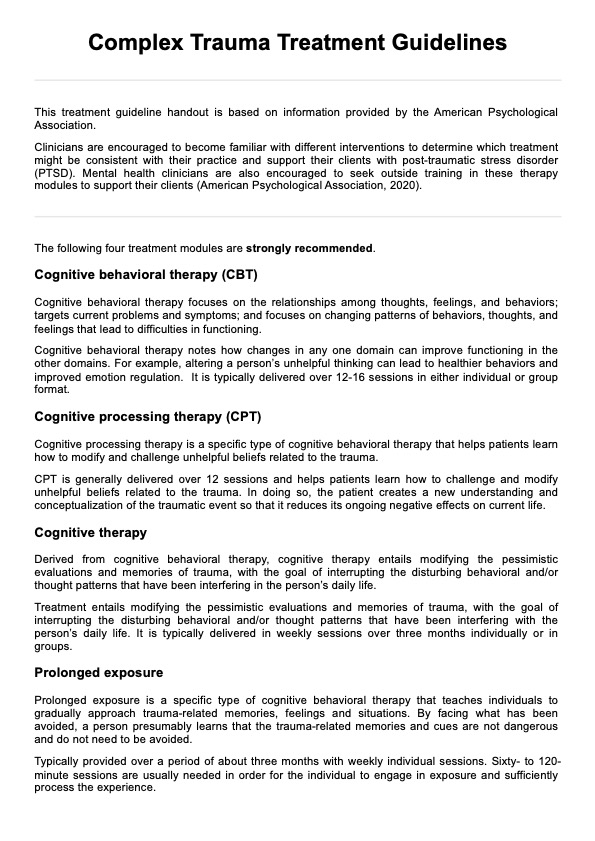
Addressing complex trauma requires tailored treatment plans that focus on healing and rebuilding trust, safety, and emotional regulation. Interventions must be carefully considered for each patient as their needs are complex, and there is no one-size-fits-all approach.









