
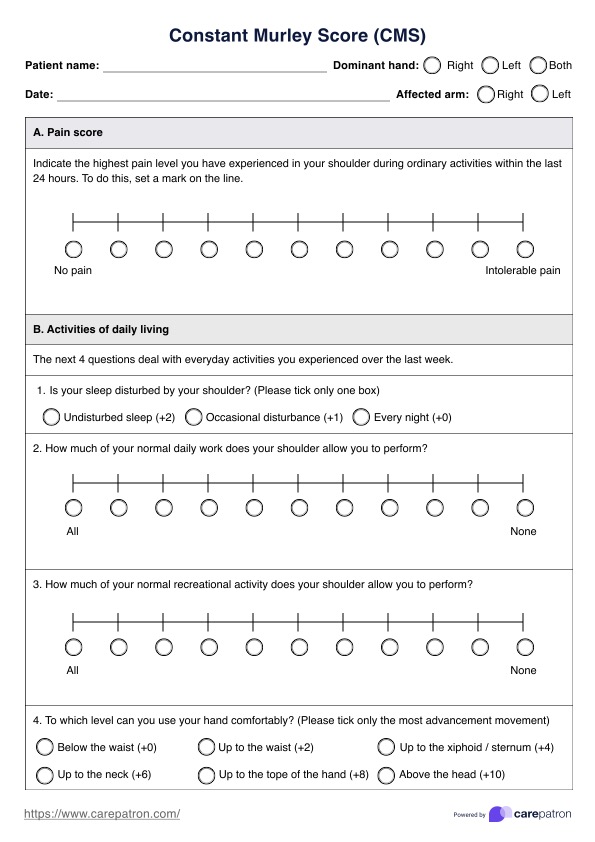




What is the Constant Murley Score (CMS)?
The Constant Murley Score (CMS) is a clinical tool (and a partly patient-reported outcome measure) used to evaluate shoulder functionality, specifically assessing pain, the ability to perform daily activities, range of motion, and strength. Healthcare professionals widely use it to gauge the severity of shoulder conditions, checking for shoulder instability, and to monitor treatment progress over time.
Several journals, including the Journal of Shoulder and Elbow Surgery (J Shoulder Elbow Surg), often use this tool for research and discussing findings, so you know that this is a tool approved by elbow surgeons, shoulder specialists, etc.
How is the constant score used?
The first portion of the constant score is a patient-reported assessment. For this part, the patient simply needs to rate their shoulder pain when performing ordinary activities and answer questions based on how their shoulder pain affects their daily life. The second part requires you to conduct physical tests to assess shoulder movement and strength.
How is it scored?
The Constant Murley Shoulder Score is scored out of a total of 100 points, divided into four main components:
- Pain score (15 points): This section evaluates the intensity and frequency of shoulder pain experienced by the patient. The constant score is based on the patient's self-reported pain level, ranging from no pain (15 points) to severe pain (0 points).
- Activities of daily living (20 points): This component assesses the patient's ability to perform common daily activities such as personal hygiene, dressing, and work-related tasks. The score is assigned based on the patient's capability to carry out these activities independently or with difficulty.
- Range of motion (40 points): This section measures the shoulder's range of motion in different directions, including flexion, abduction, internal rotation, and external rotation. Each movement is scored individually, and the total score is the sum of these measurements, reflecting the overall flexibility and mobility of the shoulder joint.
- Strength (25 points): This component evaluates the strength of the shoulder muscles, typically measured using a spring balance or similar device. The score is determined by the maximum weight the patient can hold with the arm in 90 degrees of abduction.
Next steps after using this score
After calculating the CMS, healthcare providers can determine the severity of the shoulder condition and formulate a treatment plan. A higher score indicates better shoulder function, while a lower score suggests more significant impairment.
Based on the score, a treatment strategy may include physical therapy, medication, or, in some cases, surgery. Regular reassessment using the CMS can help track the effectiveness of the treatment and make necessary adjustments.
You may also use other assessments like the Shoulder Disability Questionnaire, Oxford Shoulder Score, and other functional assessments for measuring shoulder injury, function, movement, etc., to get consistent and more comprehensive results before you make definitive diagnoses of shoulder pathologies (like rotator cuff diseases) and decide on what treatments to provide, especially if shoulder surgery is in the cards.









