




What is a Contingency Map?
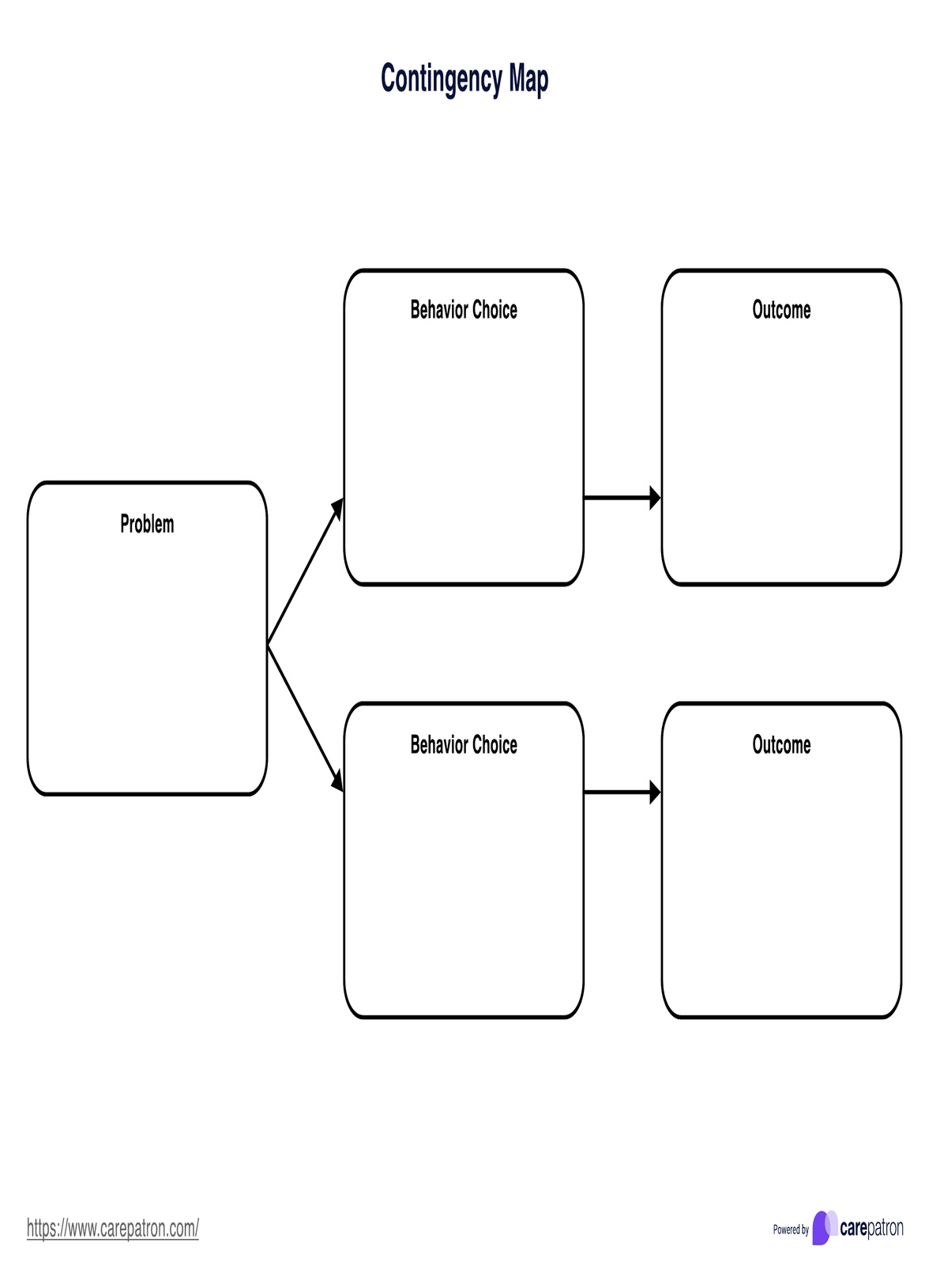
Contingency maps are a visual tool used primarily in psychology, education, and behavior management to illustrate the connection between actions and their consequences. It visually represents various scenarios, detailing what happens when different decisions are made, or behaviors are exhibited. Essentially, contingency maps help individuals understand the potential outcomes of their choices, providing a clear visual representation of "if-then" relationships.
The map is usually laid out with a central decision or action point, branching into different paths based on potential actions. Each path leads to an outcome, showcasing a decision's immediate and sometimes long-term consequences. This tool can be particularly effective for individuals who benefit from visual learning methods, including children or those with cognitive challenges.
Purpose of a Contingency Map
The primary purpose of a behavior contingency map is to aid in decision-making and behavior modification. By clearly illustrating the consequences of different actions, it helps individuals predict the outcomes of their behaviors and make more informed choices. This is especially useful in educational settings or behavioral therapy, where understanding the link between actions and results is crucial for developing personal responsibility and improving decision-making skills.
In therapeutic or educational contexts, contingency maps teach cause-and-effect relationships, helping reinforce positive behavior and deter negative behavior. For example, in a classroom setting, a teacher might use a contingency map to trigger challenging behavior and show students the consequences of following instructions versus disrupting the class. Similarly, a counselor might use it in therapy to help patients see the outcomes of various social interactions, promoting social skills and appropriate behavior.
Overall, using a contingency map fosters a better understanding and anticipation of the results of one’s actions, which is fundamental in building adaptive and functional behavior patterns.









