
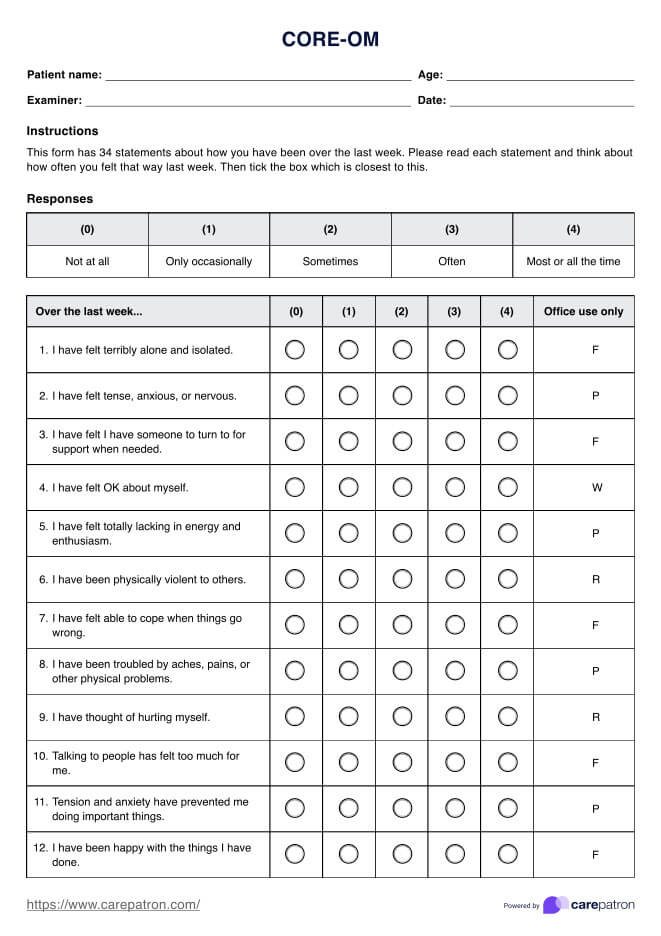




What is the Clinical Outcomes in Routine Evaluation Outcome Measure (CORE-OM)?
The Clinical Outcomes in Routine Evaluation Outcome Measure (CORE-OM), developed as part of the CORE System Trust, is a widely used core outcome measure in mental health settings to assess the effectiveness of therapeutic interventions. Developed in the UK by a group of psychotherapists and researchers, it was designed to provide a standardised brief outcome measure for evaluating changes in the outcome measures of a patient's psychological well-being throughout treatment.
The CORE-OM consists of 34 self-report items that measure a broad range of psychological difficulties, including subjective well-being, problems or symptoms, life functioning, and risk (both to self and to others). These items are rated on a 5-point Likert scale, ranging from "not at all" to "most or all of the time," allowing patients to express the frequency and intensity of their experiences. The items are divided into four domains: well-being (4 items), problems/symptoms (12 items), functioning (12 items), and risk (6 items).
One of the key strengths of the CORE-OM is its comprehensive nature, capturing both positive and negative aspects of mental health. This allows therapists to better view a patient's progress rather than focusing solely on symptom reduction. Additionally, the measure is designed to be sensitive to changes in clinical outcomes, making it suitable for tracking progress over time.
The CORE-OM has been validated in clinical populations from various settings, showing good psychometric properties that are essential to consider in counselling and psychotherapy research and practice. In clinical settings, the CORE-OM results are integrated into core information management systems to ensure consistent monitoring of patient outcomes.
It is often used at the beginning and end of therapy to assess the effectiveness of the treatment and guide clinical decision-making. Sometimes, it may also be used periodically throughout therapy to monitor progress and adjust interventions as needed.









