
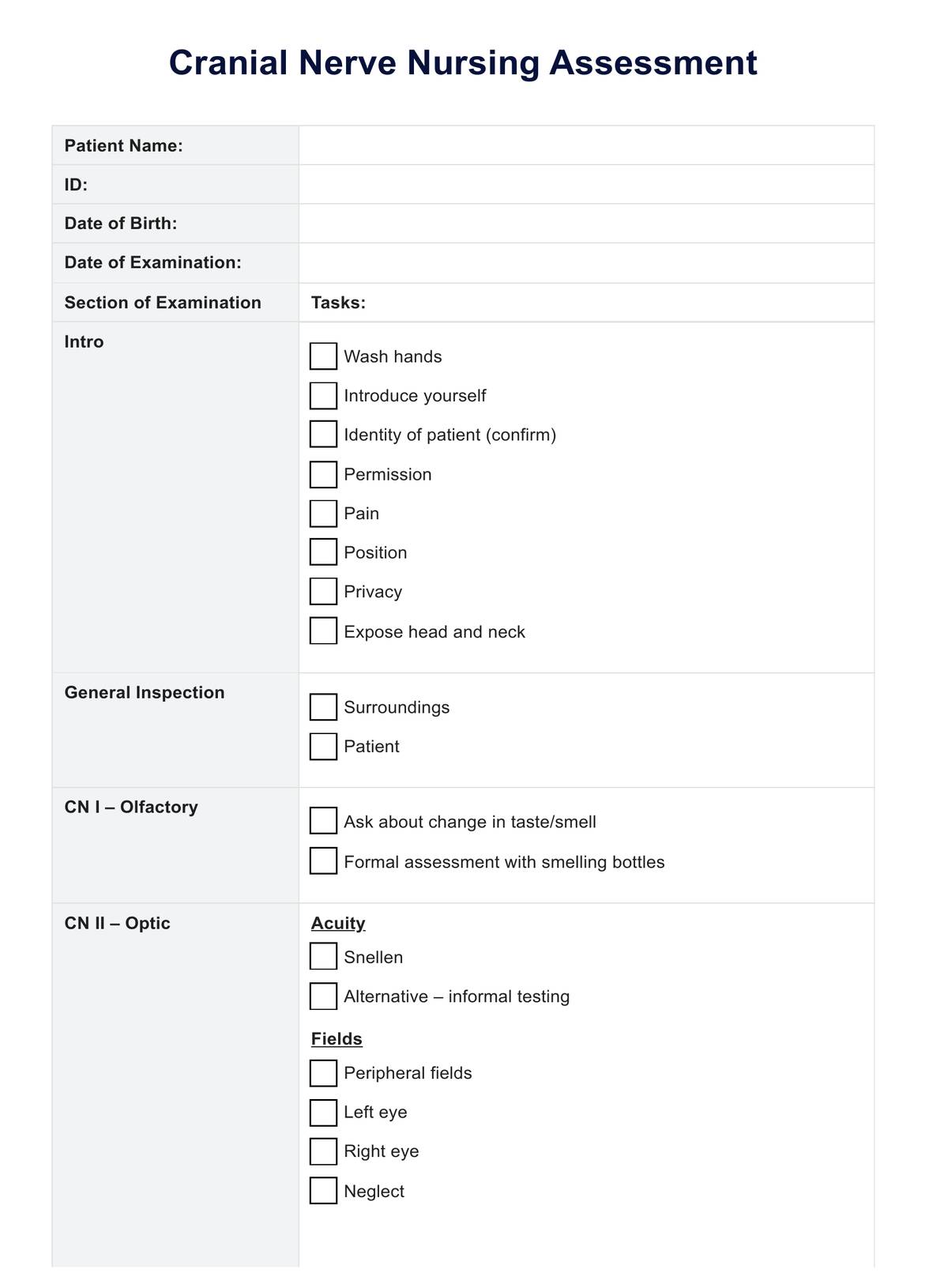




What is a Cranial Nerve Nursing Assessment?
A Cranial Nerve Nursing Assessment is a comprehensive evaluation conducted by healthcare professionals to assess the function and integrity of the nervous system and twelve cranial nerves. These nerves, originating directly from the brain, play a crucial role in various sensory and motor functions within the head and neck region. The assessment aims to identify any abnormalities or dysfunctions that may indicate neurological issues, helping guide diagnosis and appropriate interventions.
The cranial nerves are numbered and named based on their location and function, ranging from the olfactory nerve (I) responsible for the smell to the hypoglossal nerve (XII) controlling tongue movements. Each nerve has a specific role, such as controlling eye movements, facial expressions, and senses like taste and hearing.
During a Cranial Nerve Nursing Assessment, nurses employ a systematic and thorough approach to examine each cranial nerve. This involves assessing sensory functions, motor functions, and reflexes associated with each nerve. For instance, the nurse may evaluate the patient's ability to smell different odors, assess their ability to hear and interpret speech, and observe their facial expressions for signs of asymmetry or weakness.
The assessment also includes examinations like assessing pupillary responses to light, extraocular eye movements, and the patient's ability to follow visual stimuli. Testing the patient's ability to taste, move the tongue, and perform coordinated movements, such as swallowing, is also a critical part of the evaluation. The nurse observes for any signs of abnormalities in facial sensation, such as numbness or tingling, and checks the strength and coordination of the muscles associated with chewing and facial expressions.
A Cranial Nerve Nursing Assessment is particularly valuable in a variety of healthcare settings, including neurology, critical care, and general medical-surgical units. It aids in the early detection of neurological issues, which can be essential for prompt intervention and management. This assessment requires observational skills, patient interaction, and knowledge of the anatomy and functions of the cranial nerves. Any deviations from normal findings may prompt further diagnostic investigations and collaboration with other healthcare professionals to ensure a comprehensive understanding of the patient's neurological status.









