
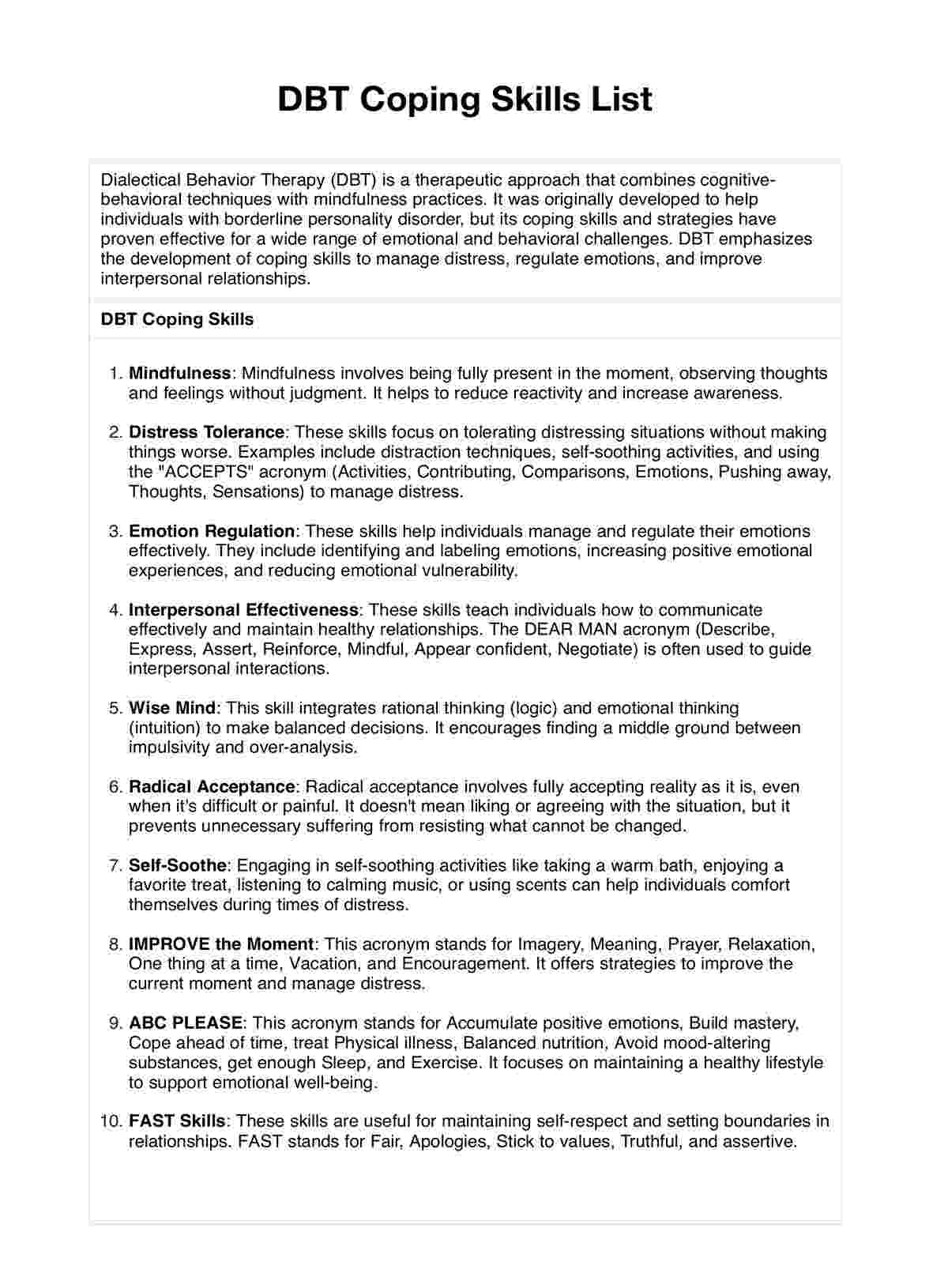




What is a DBT Coping Skills List?
Dialectical Behavioral Therapy (DBT) is a form of cognitive-behavioral therapy that emphasizes developing coping skills to manage emotional turbulence and reduce self-destructive behaviors. It combines standard cognitive-behavioral techniques with concepts of distress tolerance, acceptance, and mindful awareness, initially developed primarily derived from Buddhist meditative practice.
DBT aims to support patients during a stressful situation by helping them develop mindfulness skills that teach them how to regulate emotions, stay present in the moment, improve interpersonal effectiveness, and handle distressing situations more effectively. These acquired skills can help individuals lead healthier and more productive lives, fostering emotional resilience and a balanced state of mind.
During sessions, therapists may use a DBT Coping Skills List to help their clients identify techniques they can use to address harmful behaviors or situations. This list may include techniques such as self-soothing, distress tolerance, emotion regulation, and mindful awareness. These skills can be adapted to the individual's needs and used when coping skills are required for distress tolerance.
Using a DBT Coping Skills List allows clients to develop an effective strategy that will help them manage their emotions, stay present in the moment, enhance distress tolerance skills, and respond to stressful situations more effectively. Healthcare practitioners involved in dialectical behavior therapy can effectively develop a DBT treatment plan to support their clients and provide optimal care.









