How to use this decatastrophizing worksheet
As the practitioner, all you need to do is distribute this worksheet to your client. Your client will be the person engaging with the worksheet the most because they will be responding to the prompts.
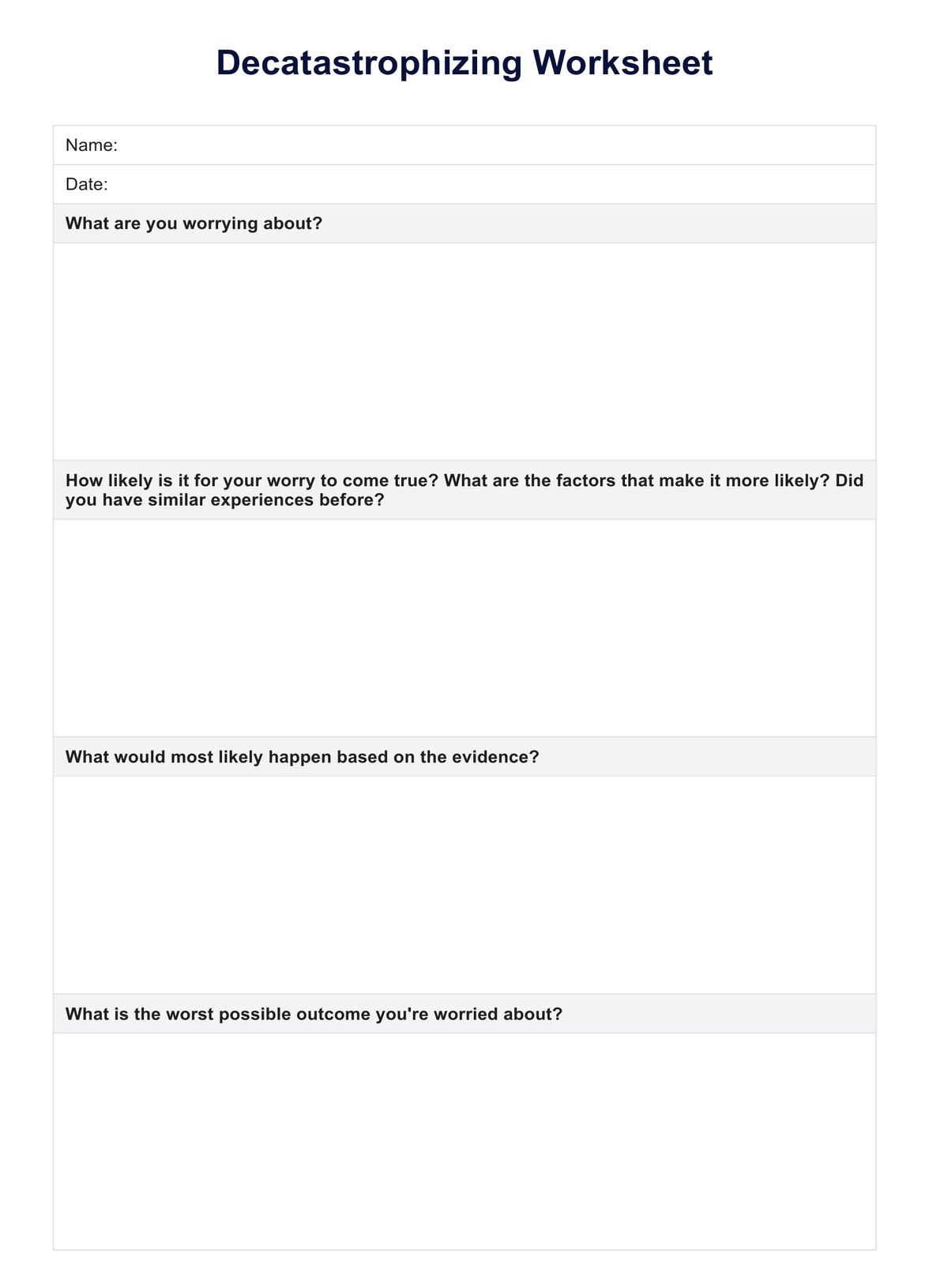
Step 1: Describe what you are worried about.
The worksheet begins with the simple question: “What are you worried about?”
This section frames the exercise immediately by having your client examine what exactly they are worried about. This is their opportunity to clearly identify the concern, especially if they had trouble discussing it with you in person or through an online appointment.
Step 2: Indicate the likeliness and evidence.
The next part question that your client must answer is “How likely is it for your worry to come true? What are the factors that make it likely? And did you have similar experiences in the past?”
Here, they have to take a step back and really examine their worries. This section encourages the client to indicate any factors that contribute to their worries and any evidence that suggests that their worries are going to come true.
Step 3: Indicate what is most likely to happen based on evidence.
Since the previous section asks for factors and evidence, they should indicate what is most likely to happen based on all of that.
Step 4: Indicate the worst possible outcome of their worries.
Similar to the previous section, this time they have to indicate the worst possible outcome of their worries, with or without evidence.
Step 5: Indicate what they would feel if their worries come true.
This is an opportunity for the client to write what they would feel for the next few days, weeks, months, or even years if their worries come true, whether it was the likely outcome or the worst-case scenario that happened.
Step 6: Indicate possible good outcomes and what they can do to actualize them.
Since the goal is to make your client feel better, this worksheet comes with a section that makes them look and hope for a better outcome. Through this section, ideally, the client takes a step back from their worries and thinks of any possible alternative outcomes, if any.
If there are possible good outcomes, they should think of and list down things they could do in order to reach those good outcomes. This encourages goal setting, if at all possible concerning their worries.
Step 7: Indicate what could put them at ease in the meantime.
If there are things that the client can do to help them relax and put their mind at ease in the meantime, it’s best for them to indicate them. It’s a good way for them to remind themselves what they can do for now.
The information that you’ll get from this worksheet should be able to help you come up with a game plan on how to make your client feel better and what they work towards as you go about the next stages of your therapy program for their cognition.