




What is the Denver Developmental Screening Test?
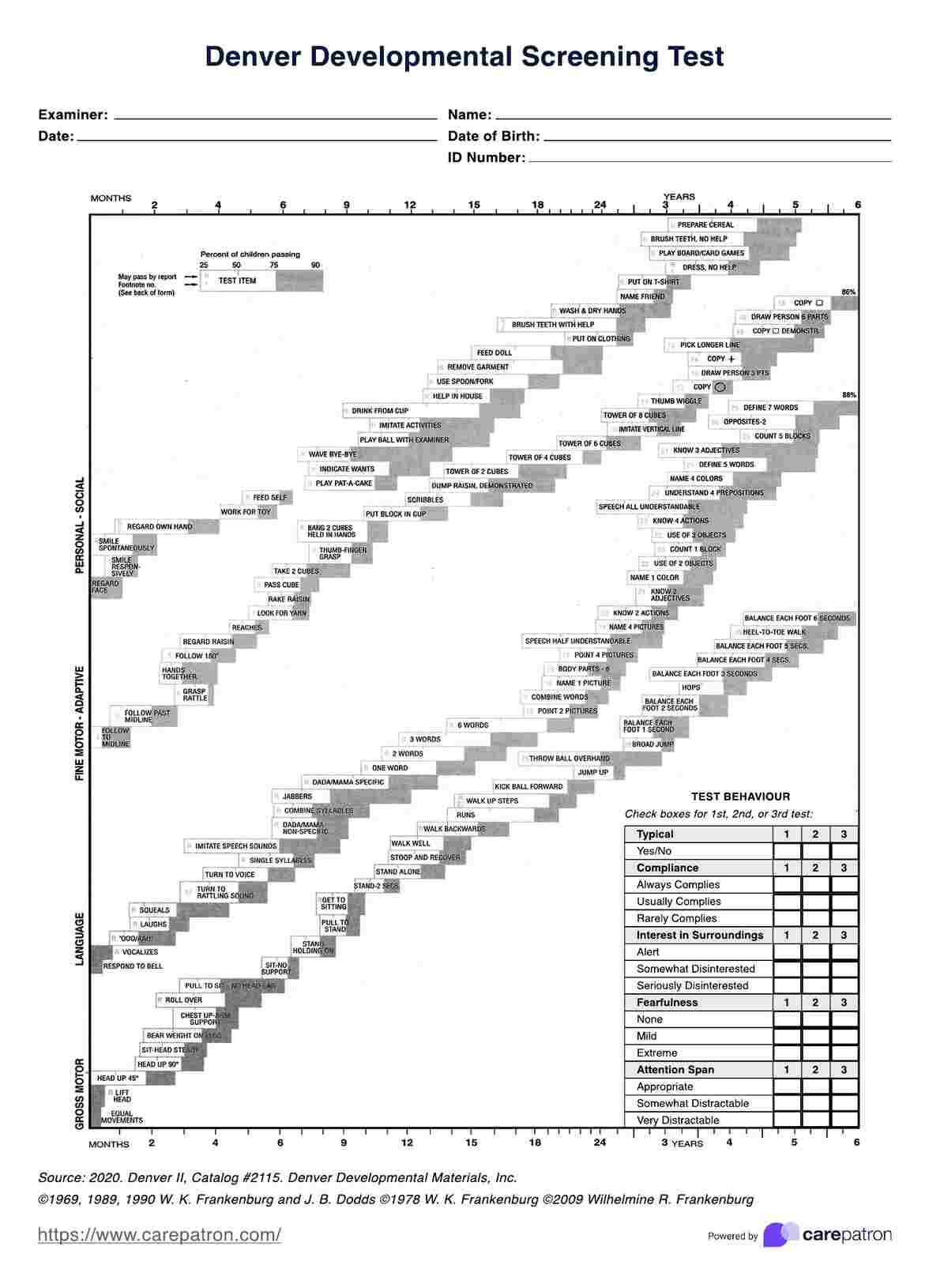
The Denver Developmental Screening Test (DDST) is a widely used assessment tool designed to identify developmental delays in young children. Developed in the 1960s by Dr. William K. Frankenburg and Dr. Robert M. Wood, this test aims to evaluate a child's developmental progress across several key areas: personal-social, fine motor-adaptive, language, and gross motor skills.
The test is typically administered by healthcare professionals, educators, or trained professionals familiar with child development. It involves observing and interacting with the child to assess their abilities in various tasks appropriate for their age group. These tasks are structured to gauge the child's milestones and developmental achievements.
In the personal-social domain, the test examines the child's interactions with others and their ability to play, share, and communicate emotions. The fine motor-adaptive section evaluates hand-eye coordination, grasp, and manipulation skills, assessing tasks like drawing, stacking blocks, or using small objects. Language skills encompass the child's ability to understand and use words, express themselves, and follow instructions. The gross motor skills portion examines larger movements, including crawling, walking, jumping, and balance.
The DDST follows a structured format with specific milestones expected for different age groups. Professionals administering the test observe the child's responses and note any delays or deviations from the expected developmental norms. If a child exhibits delays or potential issues in any area, further evaluation or intervention may be recommended to address concerns early on.
While the DDST is valuable in detecting potential developmental delays, it's essential to understand its limitations. It serves as a screening tool rather than a diagnostic instrument. A child's performance during the test may be influenced by various factors such as their temperament, environment, or temporary distractions, impacting the results.
It is important to note that cultural differences, individual variations, and the potential for false positives or negatives should be considered when interpreting the test outcomes. Viewing the results in conjunction with other assessments and observations is crucial to make informed decisions about a child's development.









