
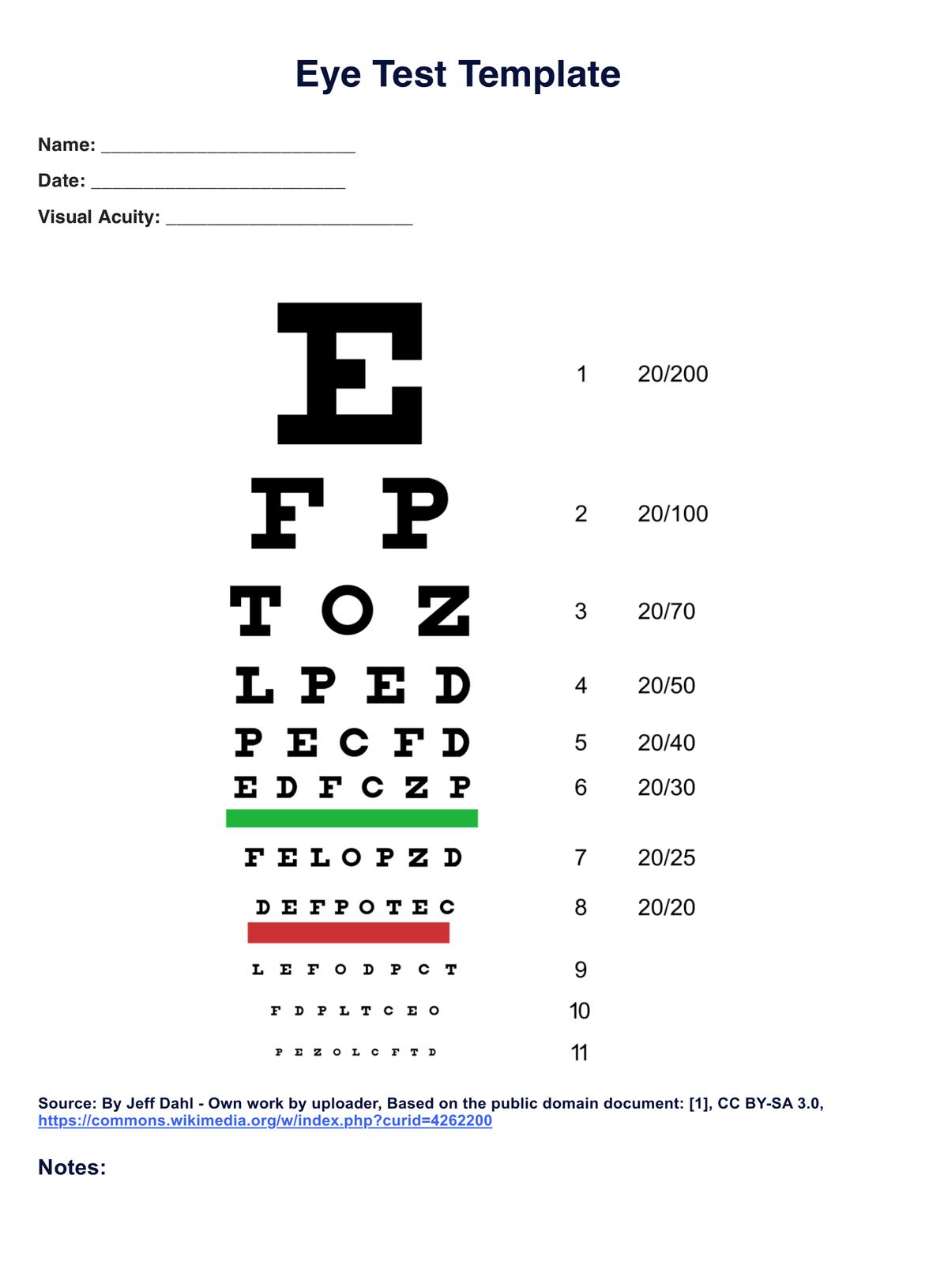




What is an Eye Test Chart?
An eye test chart is a tool used by eye care professionals to measure a person's visual acuity. Visual acuity refers to the clarity or sharpness of vision, which is quantified as a fraction, such as 20/20 in the United States or 6/6 in other countries. The top number represents the standard distance at which testing is done (20 feet in the US, 6 meters elsewhere), while the bottom number indicates the smallest line of letters that a person can read at that distance. For example, 20/20 vision means that what a person sees at 20 feet can also be seen by a typical individual at the same distance.
The most common type of eye test chart is the Snellen chart, developed by Dutch ophthalmologist Herman Snellen in the 1860s. It consists of a series of letters of decreasing size, typically arranged in 11 rows. The patient is asked to read these letters from a set distance, and the smallest row of letters that can be read accurately indicates their visual acuity.
These charts are usually mounted on a wall or displayed digitally in an eye doctor's office. Regular eye exams using these charts are essential for diagnosing vision problems like nearsightedness, farsightedness, and astigmatism. Early detection and treatment of these issues are crucial for maintaining good eye health and preventing vision impairment.
In addition to these standard practices, the use of a personalized eye test chart copy, complete with patient information and a notes section, brings additional benefits. This approach not only creates a personalized record of the patient's vision test, enhancing understanding and communication between the patient and the eye care professional but also serves as a practical tool for tracking visual health over time.
It acts as an educational resource, illustrating changes in vision and various eye conditions, and provides convenience for patients who wish to refer back to their test results. This method encourages patients to be more engaged in their eye care, fostering a more informed and proactive approach to eye health management.









