
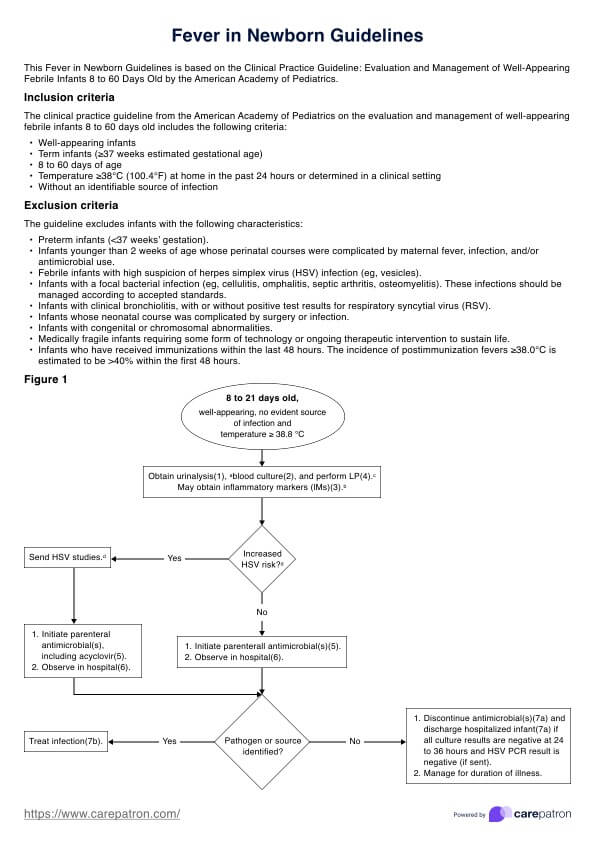




What's considered a fever in babies?
A fever in babies is typically defined as a body temperature of 100.4°F (38°C) or higher. The exact threshold can vary slightly depending on the method used to measure the temperature, which is essential for an appropriate evaluation:
- Rectal, ear, or temporal artery (forehead) thermometer: 100.4°F (38°C) or higher.
- Oral thermometer: 100°F (37.8°C) or higher.
- Axillary (armpit) thermometer: 99°F (37.2°C) or higher.
Causes of fever in babies
Fever in babies can be caused by a variety of factors, including:
- Infections: Most commonly, fever is a sign of an infection, such as a cold, flu, ear infection, invasive bacterial infection, or urinary tract infection.
- Immunizations: Some babies develop a low-grade fever after vaccinations.
- Overheating: Dressing the baby too warmly or being in a hot environment can cause an elevated temperature.
Complications of fever in babies
While most fevers are harmless and a natural response to infection, they can sometimes lead to complications, such as:
- Dehydration: Babies can lose fluids quickly with a fever, leading to dehydration or serious bacterial infections.
- Febrile seizures: Some babies and young children may experience seizures triggered by fever, known as febrile seizures.
- Serious infections: In rare cases, a fever can signify a more serious infection, such as meningitis or sepsis.
When to seek medical attention
It's important to seek medical advice if:
- The baby is younger than 3 months and has a fever of 100.4°F (38°C) or higher.
- The fever persists for more than a few days.
- The baby appears unusually irritable, lethargic, or unresponsive.
- Additional symptoms include rash, difficulty breathing, or persistent vomiting.
- If there are signs of serious bacterial infection.









