
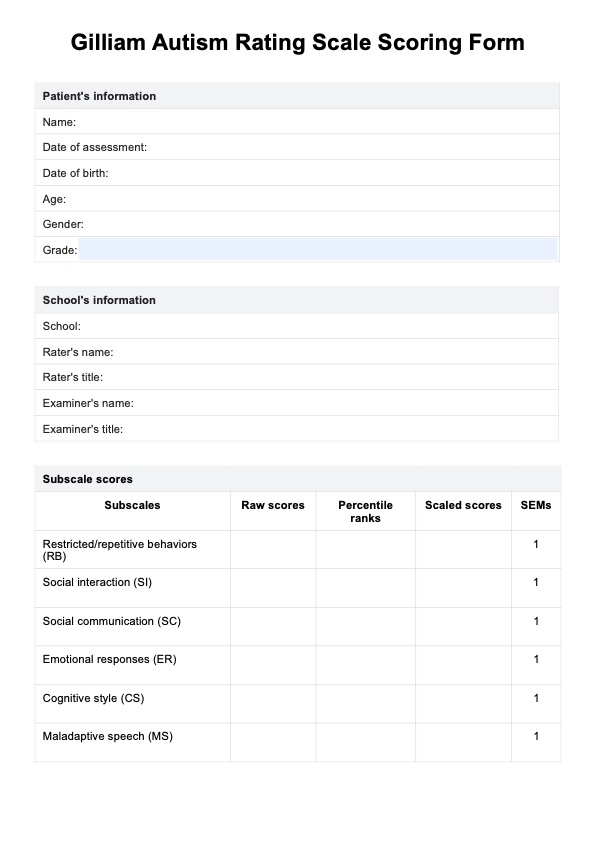




What is the Gilliam Autism Rating Scale?
Clinicians use the well-known diagnostic test Gilliam Autism Rating Scale (GARS) to assess and diagnose autism spectrum disorder (ASD), a category within broader mental disorders. Developed by James E. Gilliam, the GARS helps identify autism and quantify behaviors such as emotional responses, cognitive style, and characteristics of autism. This can help accurately discriminate children who have ASD and those who do not.
It also provides a standard measure for comparing these demographic characteristics and aligning with diagnostic and statistical manual criteria in individuals aged 3 through 22. The scale consists of various items that respondents, typically parents or professionals who know the child well, must rate based on the observed behaviors.
How is it scored?
The GARS uses a scoring system reflecting theoretical and empirical validity based on the frequency and intensity of specific autism-related behaviors, contributing to autism indexes. Each item on the scale is rated on a point system, typically from 0 (never observed) to 3 (frequently observed). These ratings are then compiled into subscales corresponding to different diagnostic criteria for autism, ensuring validity, internal consistency, and reliability coefficients exceed typical standards. The scores from these subscales are totaled to create a composite score that can suggest the likelihood of an ASD diagnosis. The higher the score, the greater the likelihood that the individual meets the criteria for autism.
Next steps after using this scale
After completing the Gilliam Autism Rating Scale and obtaining a score where autism indexes exceed expected ranges, the next steps typically involve:
- Reviewing the results: A qualified professional, such as a psychologist or psychiatrist, should review the scores to interpret what they indicate about the individual’s behavior and characteristics compared with the normative sample.
- Further assessment: If the GARS results, one of the most widely used instruments, suggest a potential autism diagnosis, further assessments may be necessary. This could include comprehensive developmental evaluations, interviews, and observations by specialists.
- Developing a plan: Based on the overall assessments, a tailored intervention plan should be developed. This plan might include behavioral therapies, educational accommodations, and possibly medical management.
- Monitoring and adjustment: The intervention plan should be regularly reviewed and adjusted as necessary to ensure it meets the changing needs of the individual as they grow and develop.









