
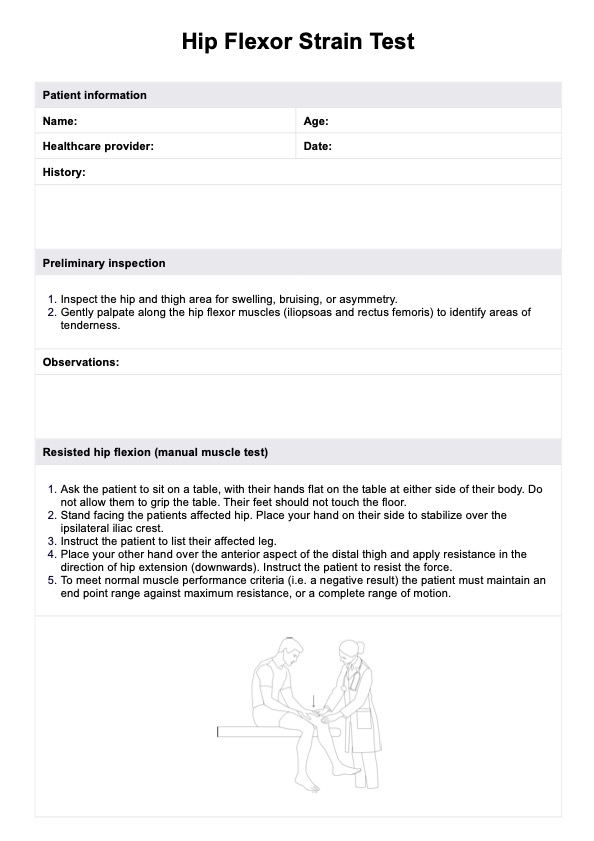




What are hip flexor muscle strains?
The hip flexor muscles are a group of muscles located in the front of the hip and thigh. Their primary function is to facilitate the flexion of the hip joint, allowing for movements such as lifting the knee towards the chest or bending forward at the waist. A strain (or 'pulled' muscle) is a common injury in which muscle fibers are torn, resulting in discomfort and limited mobility.
The main hip flexor muscles include the iliopsoas (composed of the iliacus and psoas major muscles), the rectus femoris (part of the quadriceps muscle group), and the sartorius. These muscles are crucial for walking, running, climbing stairs, and maintaining posture and stability in the pelvis and lower back.
Symptoms of hip flexor strains
Hip flexor strains can vary in severity, with symptoms ranging from mild discomfort to severe pain and immobility. Common symptoms include:
- Sharp pain in the front of the hip or groin area, especially when lifting the knee towards the chest or during activities such as running or jumping.
- Swelling or bruising in the affected area.
- Tenderness to the touch along the hip flexor muscles.
- Muscle spasms in the hip or thigh.
- Reduced range of motion in the hip joint.
- Weakness in the hip flexor muscles, making it difficult to lift the leg or perform certain movements.
- A feeling of tightness or stiffness in the hip area.
Hip flexor tears or strains causes
Hip flexor strains or tears are often caused by a combination of factors, including:
- Overuse: Repetitive movements, such as running or kicking, can put excessive strain on the hip flexor muscles, leading to tears or strains.
- Sudden movements: Quick, explosive movements, such as sprinting or changing direction rapidly, can cause the hip flexor muscles to over-stretch or tear.
- Lack of flexibility: Tight hip flexor muscles are more susceptible to injury, as they may not be able to handle the stress of certain activities.
- Muscle weakness: Weak hip flexor muscles may not be able to support the demands of certain movements, increasing the risk of injury.
- Poor posture or biomechanics: Imbalances in the body, such as an anterior pelvic tilt or leg length discrepancy, can place additional stress on the hip flexor muscles.
- Trauma: A direct blow to the hip or a fall can cause a tear or strain in the hip flexor muscles.









