
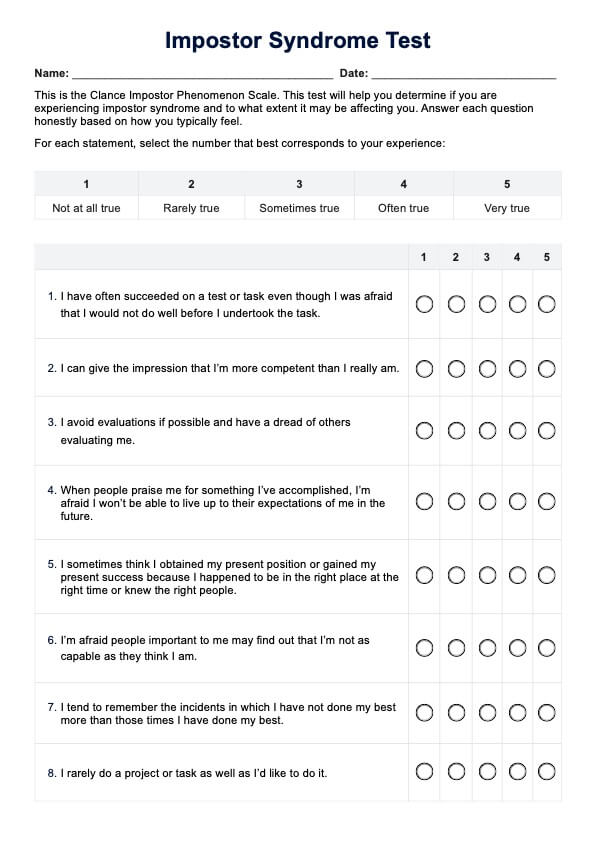




What is an Impostor Syndrome Test?
An Impostor Syndrome Test is a psychological assessment tool designed to help individuals identify whether they experience feelings commonly associated with impostor syndrome. This psychological pattern is characterized by chronic self-doubt and feelings of inadequacy— a person with imposter syndrome feels a persistent fear of being exposed as a "fraud" despite evidence of success and competence.
The term "impostor phenomenon" was first coined by psychologists Dr. Pauline Clance and Dr. Suzanne Imes (Clance & Imes, 1978). Their work described how high-achieving individuals often attribute their accomplishments to luck or external factors rather than their abilities and hard work. These attributions can fuel feelings of inadequacy and self-doubt.
After their paper came a slew of other research across the years, which gave way to the development of the Impostor Syndrome Test. This typically includes a series of statements or questions that assess various aspects of an individual's thoughts, emotions, and behaviors. These may include:
- Self-doubt and insecurity: Questions might explore how frequently an individual feels unworthy of their accomplishments or doubts their capabilities.
- Attribution of success: The test may ask whether individuals believe their success is due to external factors like luck or timing rather than their skills and effort.
- Fear of exposure: It might assess how often someone fears that others will discover they are not as competent as they appear to be.
- Perfectionism: The test could evaluate tendencies toward perfectionism and how it relates to feelings of inadequacy.
- Comparisons to others: It may ask about the extent to which individuals compare themselves to their peers and how these comparisons affect their self-esteem.
- Emotional responses: The test might gauge emotional reactions to success, such as anxiety, guilt, or fear, which are common among those with impostor syndrome.
While an Impostor Syndrome Test can offer valuable insights, it is important to note that it is not a diagnostic tool. Instead, it is a self-assessment that can help individuals recognize patterns in their thoughts and feelings.









