Treatment and management of post-infidelity stress disorder
Effectively treating and managing infidelity post-traumatic stress disorder involves several key strategies aimed at helping the betrayed partner heal from their traumatic experience.
Cognitive restructuring
Cognitive restructuring focuses on helping individuals reframe negative thoughts associated with their partner's infidelity. This process encourages them to challenge distressing memories and beliefs, promoting a more positive outlook on their self-esteem and future relationships.
Therapy
Engaging in therapy is crucial for recovery. Family therapy can address the collective trauma experienced by the members involved, fostering communication and healing within the family unit. Additionally, individual counseling sessions provide a safe space for personal healing, allowing the betrayed partner to process their feelings and develop coping strategies tailored to their unique experiences.
Support groups
Joining support groups can be beneficial for individuals dealing with PISD. These groups offer a platform for sharing experiences and receiving mutual support from others who have gone through similar situations. Connecting with others can help individuals feel less isolated and more understood as they navigate their healing journey.
Self-care practices
Implementing self-care practices is essential for managing symptoms and promoting overall well-being. This includes ensuring regular sleep, maintaining a healthy diet, and engaging in physical exercise. Additionally, incorporating mindfulness and relaxation techniques can help individuals cope with stress and anxiety triggered by ordinary objects or benign events that remind them of the betrayal.
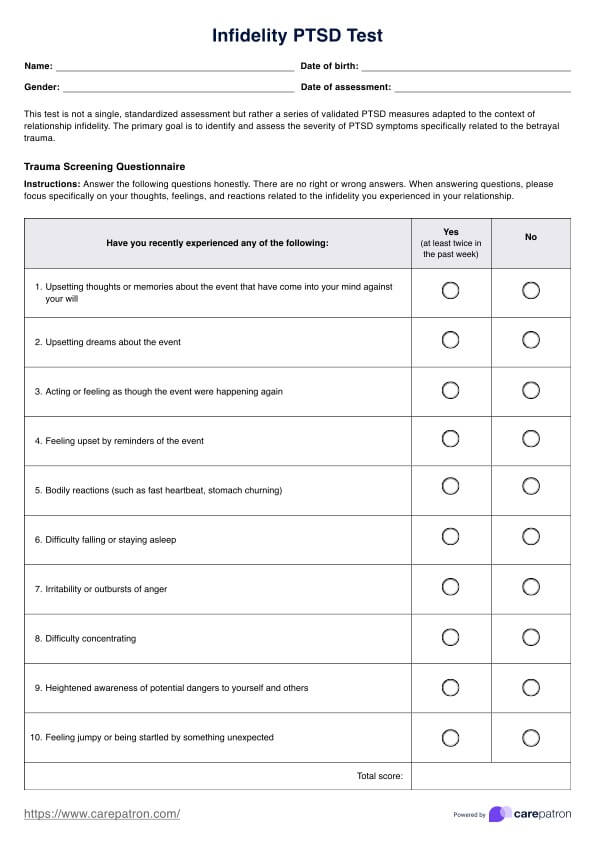
At Carepatron, we’re committed to supporting mental health professionals with the tools they need to make a difference. Our telehealth platform offers various resources, including the Infidelity PTSD Test, to help you assess and provide the best care for your clients. Sign up today and access various diagnostic tools, treatment plans, and community support.