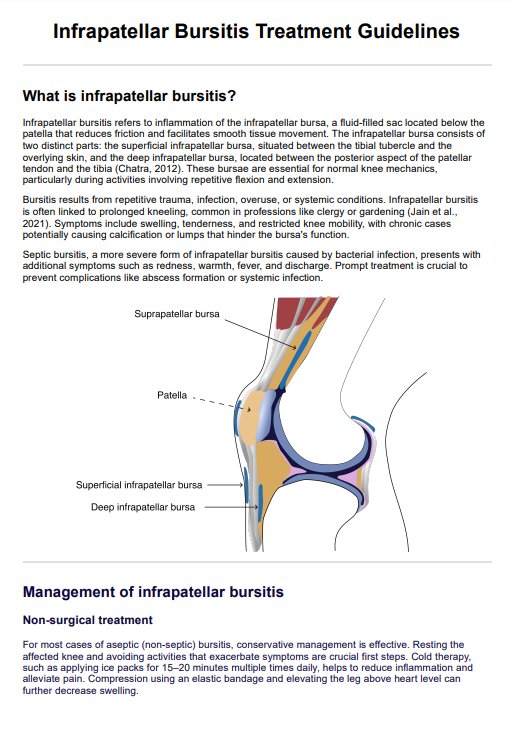
How to treat infrapatellar bursitis
Treating infrapatellar bursitis focuses on reducing pain, minimizing inflammation, and restoring knee function. Here are some of the treatment options for this condition:
Rest and activity modification
The cornerstone of treating infrapatellar bursitis is resting the affected knee and avoiding activities that worsen symptoms, such as kneeling or repetitive movements. Rest reduces strain on the inflamed bursa, allowing it to heal. Patients can also benefit from temporary measures like using knee pads or cushions to minimize further irritation, particularly in activities that require prolonged pressure on the knees.
Cold therapy
Cold therapy is a simple and effective way to reduce swelling and alleviate pain associated with infrapatellar bursitis. Applying ice packs to the affected area for 15–20 minutes multiple times a day helps minimize inflammation and soothes discomfort. This treatment is particularly beneficial during the acute phase of the condition.
Compression and elevation
Gentle compression with an elastic bandage can decrease swelling and support the knee. Elevating the affected leg above heart level further aids in reducing fluid buildup in the bursa by improving circulation and minimizing pooling of inflammatory fluids.
Medications
Non-steroidal anti-inflammatory drugs (NSAIDs), such as ibuprofen or naproxen, are frequently prescribed to manage pain and inflammation. These medications are effective in providing symptomatic relief during flare-ups and are particularly useful in addressing acute inflammation.
Aspiration and corticosteroid injections
For cases where swelling persists despite initial treatments, aspiration of the bursal fluid under sterile conditions can relieve pressure and discomfort. This procedure also allows for laboratory testing to rule out or confirm infection. Corticosteroid injections, administered directly into the bursa, are another option for reducing inflammation. These injections should be used judiciously to prevent adverse effects, such as weakening of the surrounding tissues with repeated use.
Surgical options
Surgical intervention is considered when infrapatellar bursitis does not respond to conservative treatments or is complicated by recurrent inflammation, calcification, or severe infection.
The primary surgical procedure, bursal excision, involves the removal of the inflamed bursa. This can be performed via open surgery, offering direct access to the affected area, or endoscopic techniques, which are minimally invasive and typically lead to faster recovery times. The choice of approach depends on the severity and complexity of the condition. In some cases, the surgery may require one or two stages to address associated complications comprehensively.
Post-surgical rehabilitation is also crucial to restore mobility, strengthen the surrounding muscles, and prevent stiffness, ensuring long-term success.