
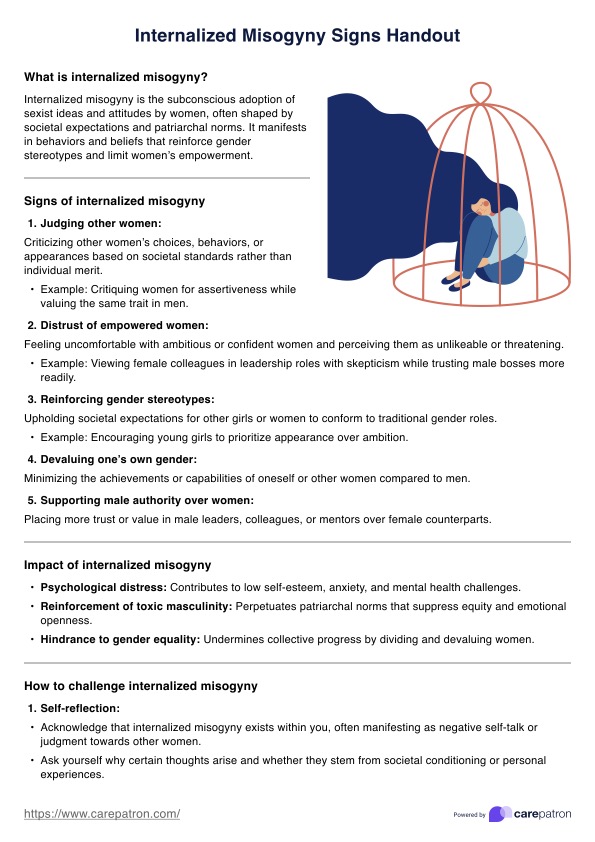




What is internalized misogyny?
Internalized misogyny refers to the subconscious acceptance of sexist ideas and gender stereotypes by women, often resulting in negative attitudes towards their own gender. Rooted in societal expectations and the norms of a patriarchal society, it can significantly impact how women view themselves and other women, perpetuating gender inequality and reinforcing toxic masculinity. From a young age, girls are exposed to gender norms that dictate how they should behave, often promoting submission or passivity while discouraging assertiveness. These early messages can shape beliefs into adulthood, influencing women to judge other women, support male authority figures like male bosses over female leaders, or devalue their own gender.
This internalized oppression can manifest as criticism of other women’s choices, distrust of empowered women, or self-doubt, contributing to psychological distress and mental health struggles. Tools like the Internalized Misogyny Scale can help identify these biases, encouraging reflection and growth. Recognizing how societal expectations affect young girls and adult women is key to dismantling internalized sexism and fostering environments where women can support one another. By challenging these ingrained ideas, women can break free from limiting beliefs and promote gender equality for themselves and future generations.









