




What are mental health medications?
Mental health medications are a cornerstone of mental health treatment, offering relief and management for a wide range of mental health disorders and conditions. These medications work on the brain's chemistry to help balance certain neurotransmitters responsible for mood and behavior.
While not a complete cure, medication can significantly improve symptoms, enhance quality of life, and enable individuals to pursue other forms of therapy effectively. Mental health professionals prescribe these medications based on a thorough assessment of the individual's symptoms, diagnosis, and overall health.
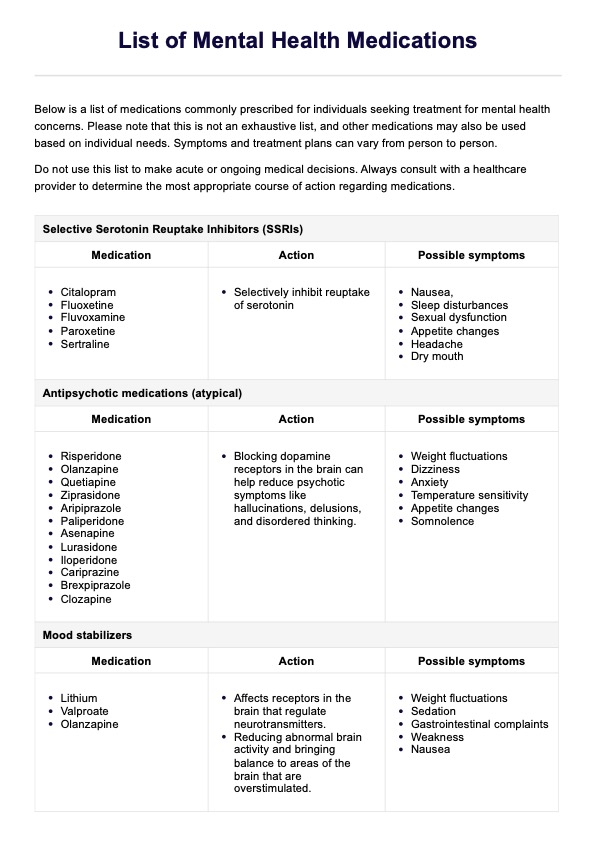
Understanding the different kinds of mental health medications to treat mental disorders is crucial for both healthcare providers and patients, as it enables targeted treatment strategies that can significantly improve quality of life. Here are some of the primary categories of mental health medications:
- Selective Serotonin Reuptake Inhibitors (SSRIs): SSRIs are among the most commonly prescribed medications for managing depression and anxiety disorders. SSRIs increase serotonin levels by blocking serotonin's reabsorption (reuptake) in the brain, enhancing mood and emotional stability. SSRIs are used mostly to treat depression and anxiety disorders (Ferguson, 2001).
- Antipsychotic medications: Antipsychotic medications are essential in treating psychotic disorders, including schizophrenia and bipolar disorder, particularly during manic or mixed episodes. These medications are effective in reducing or eliminating hallucinations and delusions, helping patients to maintain a grip on reality. Modern antipsychotics, also known as atypical antipsychotics, offer improved efficacy and a reduced risk of side effects compared to their older counterparts (Chokhawala & Stevens, 2023).
- Mood stabilizers: Mood stabilizers are primarily used to treat bipolar disorder, helping to control the dramatic swings between mania and depression. These medications work by normalizing the neurotransmitter activity in the brain, providing a stabilizing effect on mood. Lithium, one of the most well-known mood stabilizers, has been used for decades to help individuals with bipolar disorder maintain emotional balance (Freeman & Stoll, 1998).
- Anti-anxiety medications: Anti-anxiety medications, including benzodiazepines and buspirone, are prescribed to manage various anxiety disorders. These medications can quickly reduce symptoms of anxiety, such as excessive worry, fear, and panic attacks. While highly effective, benzodiazepines are typically used for short-term relief due to the potential for dependency (Bandelow et al., 2017).
- Addressing comorbid conditions: It's not uncommon for individuals with mental health conditions to experience comorbid disorders, such as obsessive-compulsive disorder (OCD), post-traumatic stress disorder (PTSD), and attention-deficit/hyperactivity disorder (ADHD). Specific medications, including those outside the traditional categories mentioned above, may be prescribed to address these conditions effectively to treat mental illness.









