




What are maladaptive coping mechanisms?
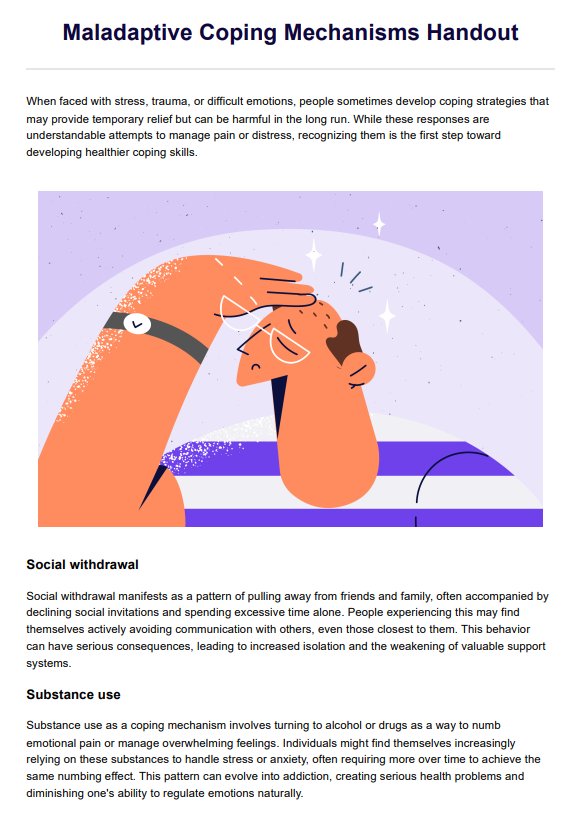
Maladaptive coping mechanisms are behavioral, emotional, and cognitive responses that provide temporary relief from stress but ultimately lead to negative consequences for physical and mental health. Unlike adaptive coping strategies that help effectively manage stressful situations, maladaptive coping behaviors often worsen the original problem and create additional challenges (Algorani & Gupta, 2023).
Common examples of maladaptive coping strategies include:
- Substance use
- Social withdrawal
- Avoidance behaviors
- Aggressive responses
- Self-harm
- Binge eating or restrictive eating
- Overworking
The development of maladaptive coping strategies often results from a complex interplay of various factors such as early life experiences and limited access to positive coping models. Without exposure to healthy coping strategies and positive coping models, children develop negative coping skills and default to maladaptive behaviors that provide immediate, though temporary, relief from psychological distress.
When faced with extreme stress or uncontrollable stress, people may also adopt maladaptive coping mechanisms if they lack the resources or skills for more effective responses. Post-traumatic stress disorder (PTSD) can particularly influence the development of these patterns.









