
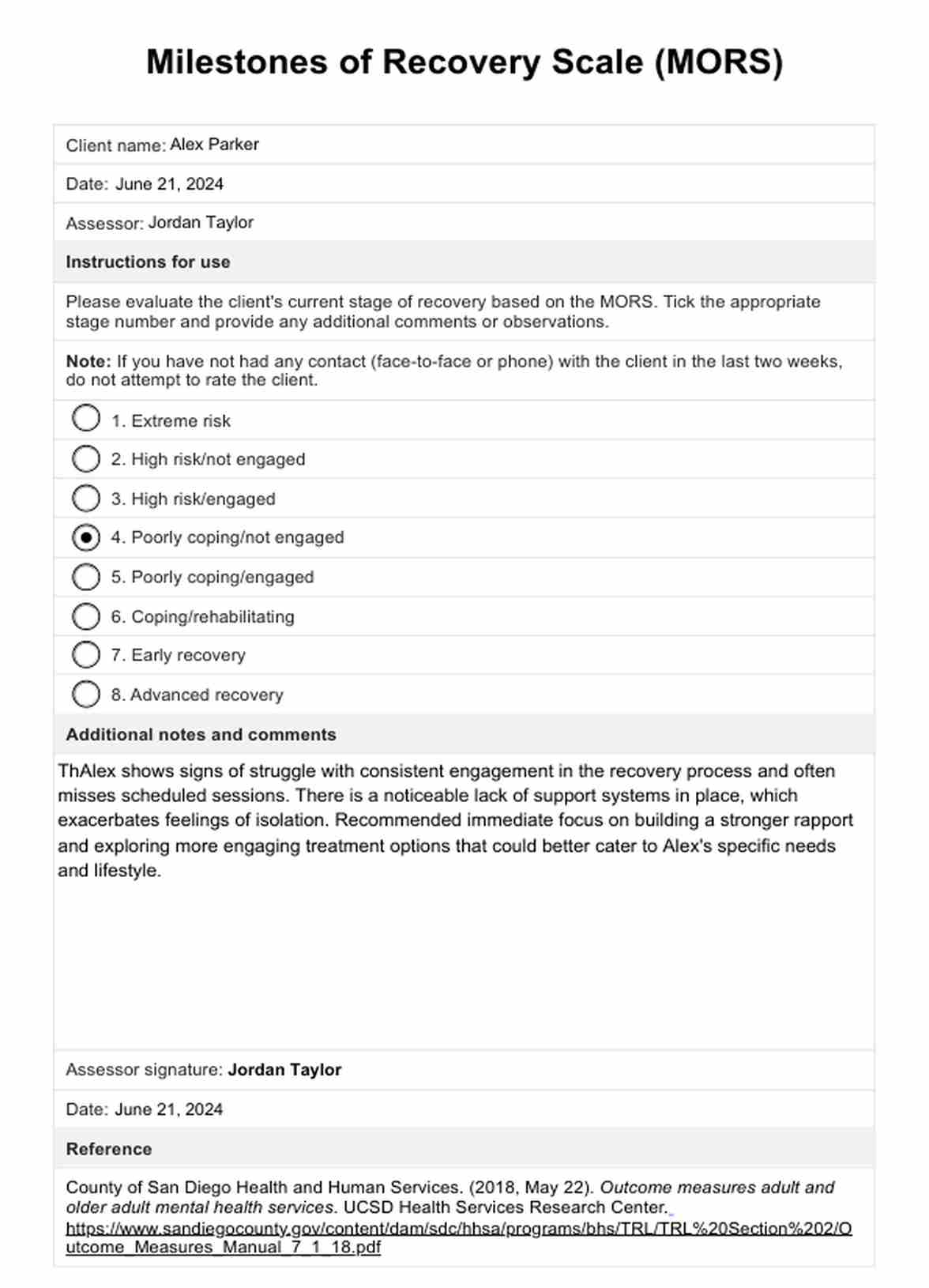




What is the Milestones of Recovery Scale (MORS)?
The Milestones of Recovery Scale (MORS) is a tool used in the mental health field to assess the progress and recovery journey of individuals with severe mental illness. The MORS is designed to be simple yet effective in evaluating a person's recovery journey. It provides mental health professionals with a standardized method to measure recovery stages, helping tailor interventions and supports to the individual's needs.
The MORS identifies recovery along a continuum from severe impairment to full recovery, considering factors such as risk, engagement, and skills acquisition. It emphasizes a strength-based approach, focusing on the individual's capabilities and potential for improvement rather than just their deficits. This tool also helps clinicians and addiction professionals celebrate recovery milestones by providing a clear framework for evaluating progress.
How is it scored?
The MORS consists of a scale with eight distinct levels, each representing a different stage of recovery:
- Extreme risk
- High risk/Not engaged
- High risk/Engaged
- Poorly coping/Not engaged
- Poorly coping/Engaged
- Coping/Rehabilitating
- Early recovery
- Advanced recovery
Scoring is based on the clinician's assessment of the individual's current state, considering their risk of harm, level of engagement with services, and ability to manage daily living activities. The scale is typically completed during regular client assessments and involves a combination of clinical observation, self-reporting by the client, and input from other care providers.
The scale helps track addiction recovery milestones, guiding treatment programs tailored to individual needs. Using the MORS, clinicians can identify significant milestones in a patient's treatment journey.
Next steps after using this scale
After scoring an individual on the MORS, the next steps involve using the results to inform treatment planning and service delivery. This might include:
Step 1: Personalized care plans
Develop or adjust care plans based on the individual's specific stage of recovery, focusing on enhancing strengths and addressing areas of need.
Step 2: Targeted interventions
Implement interventions that are appropriate for the individual's recovery stage and integral to comprehensive treatment programs. For example, someone at a higher risk level might need more intensive support, while someone in early recovery might benefit from skill-building activities.
Step 3: Monitoring progress
Monitoring progress is crucial as it helps clients build a new life by moving away from their past habits. It is also crucial for those aiming to stay sober by providing regular feedback and support.
Step 4: Collaborative care
Engage the individual in their recovery process, encouraging active participation in setting goals and making decisions about their treatment. This step encourages clients to set personal goals that align with their recovery needs. Engaging with clients in person is also essential for effective recovery management.
Step 5: Resource allocation
Ensure that resources are appropriately allocated to meet the needs of individuals at different stages of recovery, enhancing the efficiency and effectiveness of mental health services. Recovery is a lifelong journey, and MORS provides the necessary tools to navigate this process.









