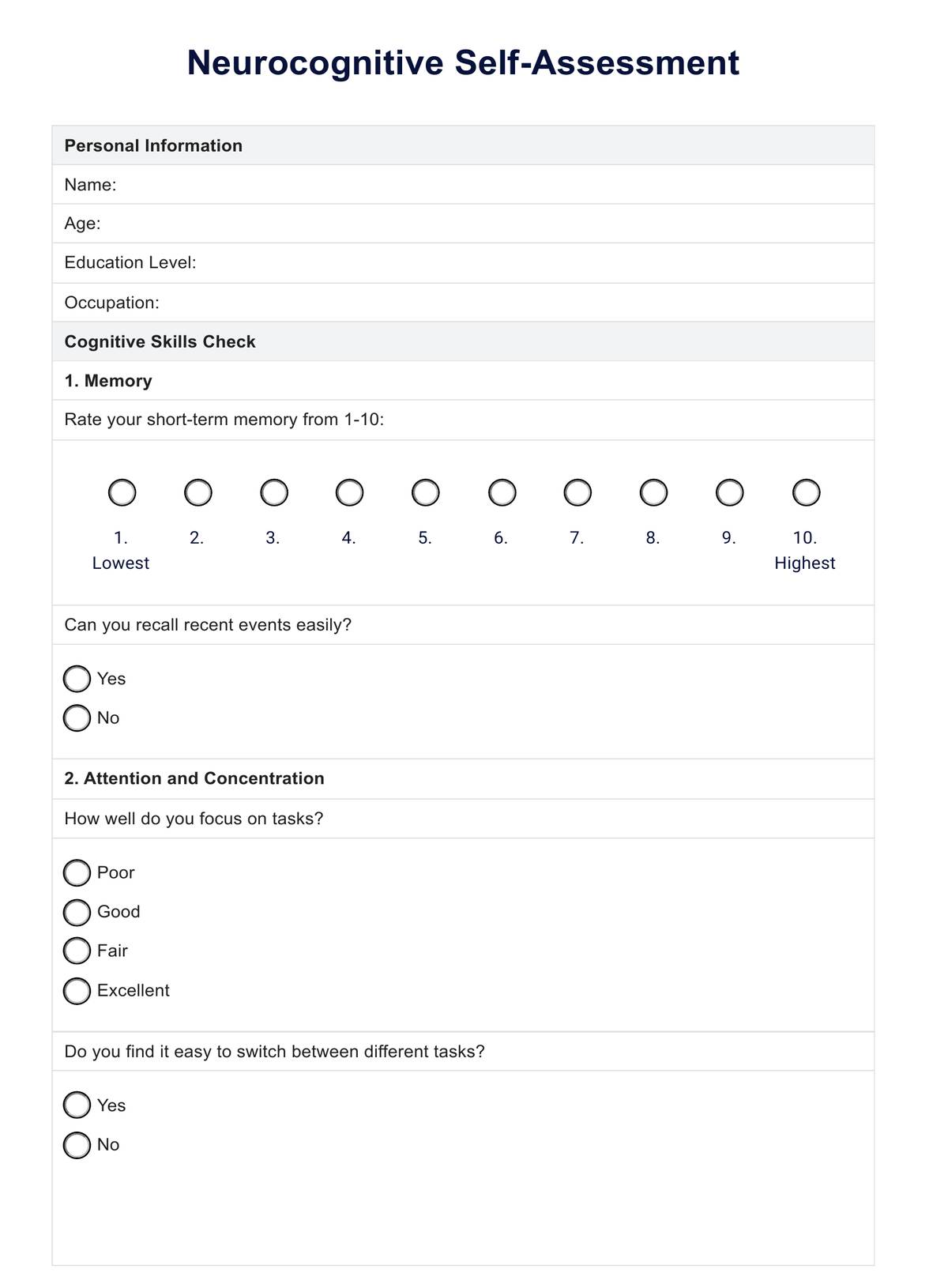
How is neurocognitive function evaluated?
Neurocognitive function is evaluated through a combination of comprehensive assessments that target various cognitive domains. The evaluation typically involves a series of standardized tests and tools designed to measure specific aspects of cognitive functioning. Here's a breakdown of the evaluation process:
Baseline assessments
Initial assessments establish a baseline of cognitive abilities. These may include general cognitive tests to gauge overall cognitive function and a memory test to identify potential areas of concern. You can leverage the Memory Test Template to enhance your practice and improve client outcomes. This template provides a comprehensive framework for assessing cognitive function and identifying memory issues.
Cognitive abilities
Testing covers a range of cognitive abilities, such as memory, attention, language skills, problem-solving, and executive functions. Each test is tailored to assess a specific cognitive domain, providing a detailed picture of an individual's strengths and weaknesses.
Behavioral observations
In addition to standardized tests, behavioral observations are integral to the evaluation. Clinicians observe how individuals approach tasks, handle challenges, and interact in various situations. This qualitative data helps supplement the quantitative results from standardized tests.
Specific cognitive domains
Neurocognitive testing targets specific cognitive domains, including processing speed, memory, attention span, language skills, and executive functioning. By assessing these domains, clinicians can identify cognitive patterns and potential areas of impairment.
Comparative analysis
Results are often compared to age-appropriate norms to determine how an individual's cognitive function compares to the expected range for their age group. Deviations from these norms may indicate cognitive deficits or areas that require further investigation.
Diagnostic impressions
The evaluation process leads to diagnostic impressions, where clinicians analyze the gathered data to formulate insights into an individual's neurocognitive and executive function together. This step is crucial for identifying potential cognitive disorders or conditions affecting cognitive performance.
Future tests and interventions
Based on the evaluation results, clinicians may recommend additional tests or interventions tailored to address specific cognitive challenges. This proactive approach enables the development of targeted strategies to enhance cognitive functioning or manage cognitive decline.