
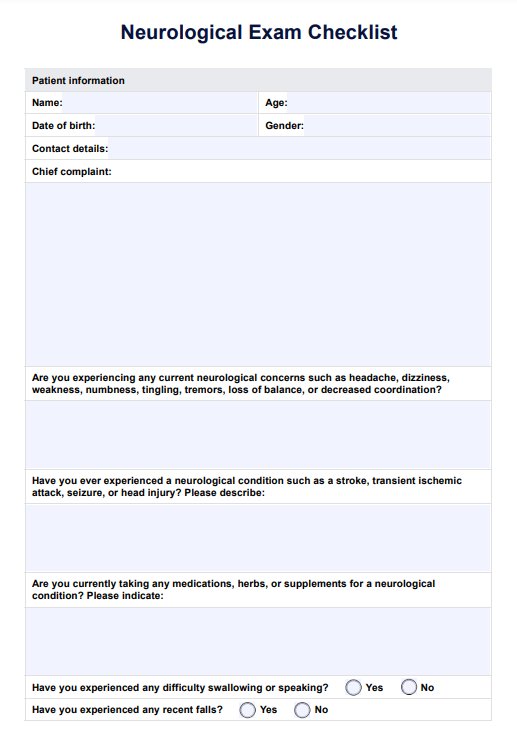




What is a neurological exam checklist?
A neurological examination checklist is a structured and systematic tool used by healthcare professionals to evaluate and document a patient’s neurological status. This comprehensive neurological exam assesses critical components of the nervous system, including mental status, cranial nerve function, motor strength, sensory perception, reflexes, and gait. By following this checklist, clinicians can identify neurological deficits, such as multiple cranial nerve deficits or other signs of dysfunction, that may indicate conditions like traumatic brain injury or neurological disease.
The neurological assessment checklist ensures thorough testing of the twelve cranial nerves, including cranial nerve I (olfactory nerve), cranial nerve ii (optic), cranial nerve VII (facial nerve), and cranial nerve XI (accessory). It also examines motor coordination, reflex responses, and sensory awareness. The checklist aids in detecting abnormalities in the central and peripheral nervous systems and supports clinical assessments during initial nurse-patient interactions and follow-up evaluations.
This tool can be helpful in the initial nurse-patient interaction and is essential for identifying neurological concerns and guiding treatment plans. The checklist also enhances communication among healthcare providers and ensures a standardized approach to neurological examinations in diverse clinical settings.









