What is a Nursing Care Plan for Impaired Memory?
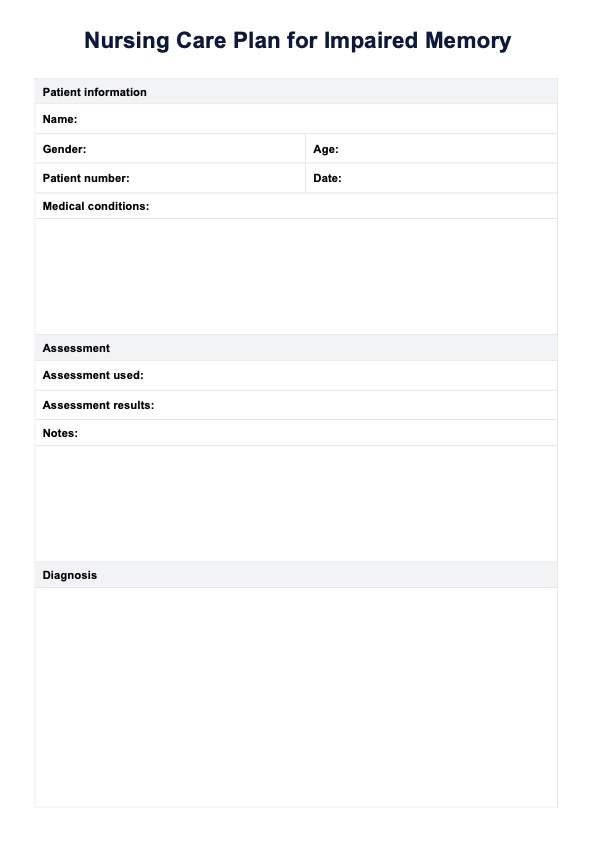
An impaired memory nursing care plan (NCP) is essential for addressing the needs of patients experiencing cognitive decline or memory issues. This care plan focuses on enhancing the patient’s memory function and overall quality of life while ensuring their safety and emotional well-being. Here's an outline of how this NCP is composed of:
Assessment
A comprehensive assessment is the cornerstone of an effective impaired memory nursing care plan. It involves a multifaceted evaluation that includes not only the patient’s cognitive abilities but also their emotional and social contexts. Utilize standardized tools such as the Mini-Mental State Examination (MMSE) or Montreal Cognitive Assessment (MoCA)to quantify the degree of memory impairment. Additionally, gather information regarding the patient's medical history, current medications, and psychosocial factors, such as stressors or support systems, that may contribute to memory issues. This holistic approach ensures a clear understanding of the patient's unique situation, allowing for tailored interventions.
Nursing diagnosis
The impaired memory nursing diagnosis is a critical step in the NCP, guiding the focus of care. For instance, a diagnosis such as "Impaired memory related to age-related cognitive decline as evidenced by forgetfulness and difficulty recalling recent events" provides a clear framework for intervention. It is vital to document specific examples of memory impairment, including the frequency and context of memory lapses, to refine the nursing strategies employed. This diagnosis not only directs nursing interventions but also serves as a communication tool among healthcare team members.
Goals and outcomes
Establishing clear and measurable goals is essential for evaluating the effectiveness of the care plan. For example, a goal like "The patient will recall three recent events during each interaction by the end of the week" provides a concrete target for both the patient and healthcare team. These outcomes should be realistic, considering the patient’s cognitive level and overall health status. Regularly revisiting and adjusting these goals based on patient progress ensures that the care plan remains relevant and focused on achievable milestones, ultimately promoting a sense of accomplishment for the patient.
Interventions
Tailored interventions are crucial in an NCP for impaired memory, as they directly address the patient's cognitive challenges. Environmental modifications, such as creating a structured, clutter-free space, can significantly minimize distractions and enhance focus. The use of memory aids, like calendars, alarms, or visual reminders, empowers patients to take an active role in managing their memory challenges.
Engaging the patient in cognitive stimulation activities, such as puzzles, memory games, or reminiscence therapy, not only aids memory recall but also fosters social interaction, which is beneficial for emotional health and enhances cognitive function. These interventions should be implemented collaboratively with the patient, ensuring they are meaningful and feasible for their daily routines.
Rationale
Nursing interventions for impaired memory are based on the understanding that cognitive impairment is a result of brain dysfunction. Each intervention should have a rationale that aligns with the patient's cognitive deficits and supports their functional abilities. The rationale behind each intervention should be clearly documented in the care plan and regularly evaluated for effectiveness. For example, environmental modifications are based on reducing external stimuli to minimize distractions, while memory aids serve as compensatory strategies to support cognitive functioning.
Evaluation
Continuous evaluation is vital for determining the success of the interventions outlined in the impaired memory care plan. This involves regularly assessing the patient's progress toward the established goals and documenting any changes in memory function or overall well-being. Utilize both formal assessments and informal observations to capture a comprehensive picture of the patient's progress. Adjust the care plan as needed to reflect the patient's evolving needs and responses to interventions, ensuring that it remains dynamic and patient-centered. This ongoing process fosters a proactive approach to memory care, enabling timely modifications that enhance patient outcomes.