Common lab values
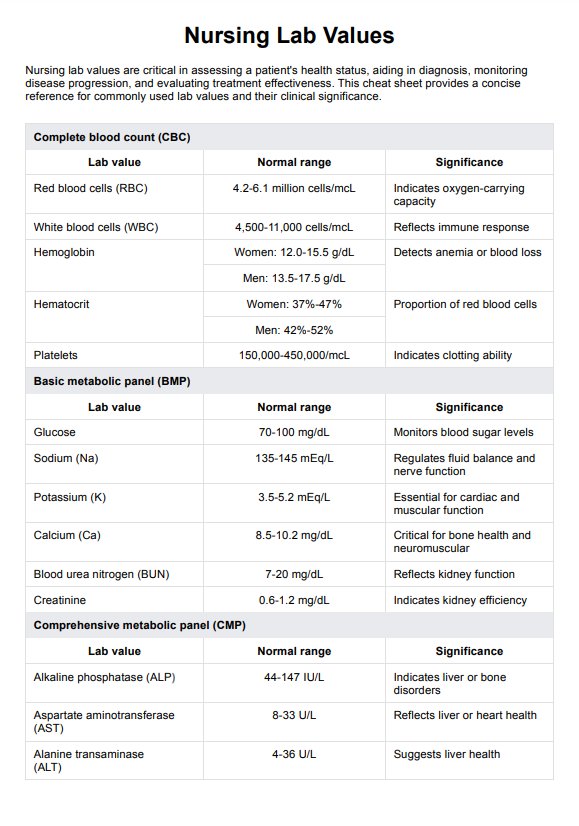
Nursing professionals use common lab values to evaluate patients' health, diagnose conditions, and guide treatment plans. These values are essential for accurate clinical decision-making. Below are the primary categories of lab values used in laboratory tests and their significance (Gaines, 2023):
Complete blood count (CBC)
A CBC blood test evaluates blood components, including red blood cells (RBC), white blood cells (WBC), hemoglobin, hematocrit, and platelets. It helps detect conditions like anemia (if corpuscular hemoglobin concentration is above or below normal range), infections, and clotting disorders. RBC levels assess oxygen transport, while WBC counts monitor immune response. Hemoglobin and hematocrit reflect blood volume, and platelet counts assess clotting ability.
Basic metabolic panel (BMP)
The BMP includes measurements such as glucose (70-100 mg/dL), sodium (135-145 mEq/L), and potassium (3.5-5.0 mEq/L). These values monitor essential functions like blood sugar control, fluid balance, and cardiac health. Other tests, including blood urea nitrogen (BUN) and creatinine, assess kidney efficiency, renal failure, and metabolic waste removal.
Comprehensive metabolic panel (CMP)
A CMP expands on the BMP by including liver-related values such as ALT (7-56 U/L), AST (8-33 U/L), and bilirubin (0.1-1.2 mg/dL). These tests help diagnose liver disease, monitor overall health, and assess protein levels like albumin and total protein, which indicate nutritional and liver status.
Arterial blood gas (ABG)
ABG measures blood pH (7.35-7.45), PaO2 (75-100 mmHg), PaCO2 (35-45 mmHg), and bicarbonate levels. These values assess respiratory and metabolic function. They are critical in identifying acid-base imbalances, oxygenation issues, and CO2 retention, especially in critically ill patients.
Lipid panel
A lipid panel evaluates cardiovascular health by measuring total cholesterol (<200 mg/dL), LDL (<100 mg/dL), HDL (40-60 mg/dL), and triglycerides (<150 mg/dL). These values help identify risks for heart disease and guide interventions for lowering "bad cholesterol" (LDL) and boosting "good cholesterol" (HDL).
Liver function tests (LFTs)
LFTs include ALT, AST, and bilirubin tests to assess liver health and detect damage. Elevated values may indicate liver disease, bile duct obstruction, or inflammation. These tests are often ordered to monitor chronic liver conditions or assess the impact of medications on liver function.
Hemoglobin A1C
The Hemoglobin A1C is a lab test that measures average blood sugar levels over three months. Values below 5.7% are normal, 5.7%-6.4% indicates prediabetes and ≥6.5% confirms diabetes. This test is critical in diagnosing and managing diabetes, offering insights into long-term glucose control.
Drug therapeutic levels
Drug level monitoring ensures medications like digoxin (0.5-2 ng/mL) and phenytoin (10-20 mcg/mL) are within safe therapeutic ranges. These values help prevent toxicity and ensure efficacy for conditions like heart rate control, epilepsy, and bipolar disorder.
Coagulation studies
Coagulation studies, including PT (11-13.5 seconds) and INR (0.8-1.1), measure clotting ability. Abnormal values may indicate clotting disorders, liver dysfunction, or the need to adjust anticoagulant therapy. These tests are essential for monitoring bleeding risks and managing anticoagulant medications.