## **What is observing and describing emotions in DBT?**
Emotions are fundamental to human experience, yet many people struggle to identify and regulate their emotional responses effectively.
Observing and describing emotions represents a core component of dialectical behavior therapy (DBT), specifically within the mindfulness skills module. This skill involves learning to notice emotional experiences without immediately reacting or trying to change them. When helping clients observe emotions, practitioners help develop the ability to step back and notice what's happening in their body, thoughts, and urges without getting caught up in the emotional intensity.
The process begins with recognizing that emotions serve essential functions: they provide information about our environment, motivate action, and facilitate communication with others. However, many people struggle with dealing with emotions because they haven't learned to identify and describe them accurately. This is where the distinction between primary and secondary emotions becomes crucial in emotion regulation skills.
### **Primary and secondary emotions**
Primary emotions are the first emotional response to a situation. When something happens that triggers fear, sadness, or anger, these immediate reactions are primary emotions. They're often adaptive and provide important information about what's happening in one's life.
Secondary emotions, on the other hand, are individuals' emotional reactions to their primary emotions. For instance, a client might report feeling angry about feeling sad, or anxious about being angry. These secondary emotions can create additional suffering and make it harder to cope with the original situation.
The difference between simply experiencing emotions and mindfully observing them lies in one's relationship to the emotional experience. Instead of being overwhelmed by intense feelings, you can help clients learn to sit with them and describe what they notice. This doesn't mean becoming emotionally numb; rather, it means developing the capacity to remain present with their emotions while maintaining some perspective.
People who can accurately recognize and describe their emotions tend to have better emotion regulation and overall mental health. This skill becomes particularly beneficial when you're struggling with emotional overwhelm or when emotions feel too intense to manage effectively.
## **How to use the Observing and Describing Emotions DBT Worksheet**
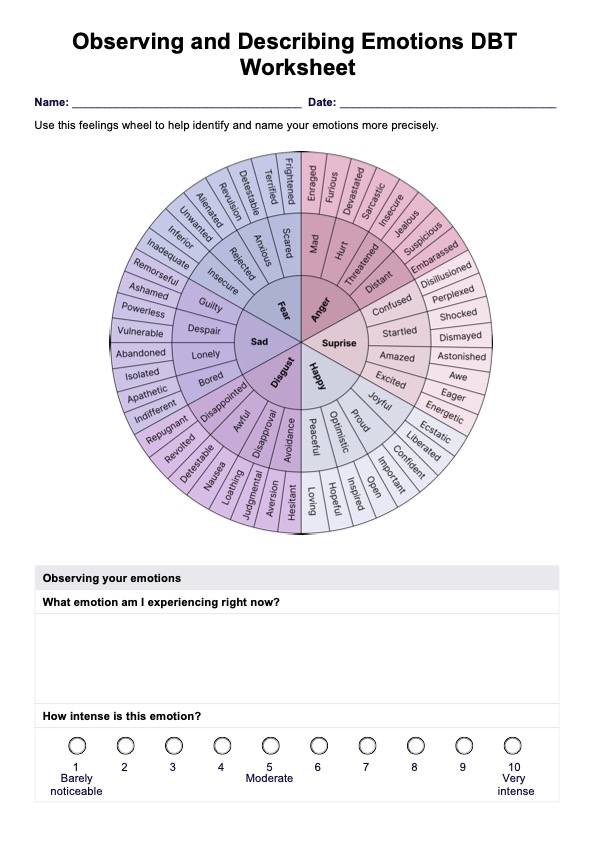
This emotions DBT worksheet offers a structured approach to developing emotional awareness and regulation skills. This worksheet provides a structured way to practice the essential DBT skills of emotional observation and description.
The exercise guides users through a systematic process of examining their emotional experiences, helping them develop greater emotional awareness and regulation abilities. Here's how to get started:
### **Step 1: Access and download the template**
You can access this worksheet through the Carepatron platform by clicking "Use template" to open a customizable file that you can modify before printing or sending to clients.
Alternatively, you can select "Download" to get a PDF copy that's ready to use immediately. The template is designed to be flexible, allowing you to adapt it to your specific practice needs while maintaining the core structure that makes it effective.
### **Step 2: Identify the emotional experience**
Begin by helping clients identify what they're currently feeling or a recent emotional experience, whether negative or positive events, they want to explore. This step involves naming the emotion as specifically as possible.
Rather than saying "I feel bad," I encouraged clients to dig deeper—are they feeling disappointed, frustrated, overwhelmed, or something else? The worksheet includes an emotion reference guide to help with this process.
### **Step 3: Observe physical sensations, thoughts, and urges**
The next step involves noticing what's happening in the body. Emotions aren't just mental experiences—they create physical sensations that provide valuable information. Beyond this, emotions also come with automatic thoughts and behavioral urges.
When someone feels fear, they might think "something terrible is going to happen" and feel the urge to escape. When angry, they might think "this isn't fair" and want to lash out. The worksheet helps users identify these cognitive and behavioral components of their emotional experience.
### **Step 4: Describe without judgment**
The final step involves describing the entire emotional experience as if explaining it to someone who has never felt that emotion before. This exercise encourages objective observation rather than interpretation.
Instead of "I'm feeling awful because I'm a failure," the description might be "I'm experiencing disappointment about not meeting my goal, with physical sensations of heaviness and thoughts about trying again." This non-judgmental description is one of the four skills in DBT mindfulness, and it's essential for developing healthy emotional processing.
When clients can describe their emotions without adding layers of judgment or interpretation, they often find that the emotions become more manageable and less overwhelming.
## **When would you use this Observing and Describing Emotions DBT Worksheet?**
This worksheet serves multiple purposes in therapeutic settings and can be particularly valuable when clients are struggling with emotional overwhelm or need to develop better emotion regulation skills. The timing of when to introduce this tool can significantly impact its effectiveness.
### **During emotional dysregulation episodes**
When clients are experiencing intense emotions that feel unmanageable, this worksheet can help them slow down and process what's happening. Rather than reacting immediately, they can take deep breaths and work through the steps to better understand their emotional experience. This practice is especially beneficial when someone is dealing with anger, sadness, or fear that feels too overwhelming to cope with effectively.
The worksheet can be used in the moment of emotional intensity, though it's often helpful to practice with less intense emotions first. When someone is familiar with the process, they can use it as a grounding tool during difficult times.
### **After challenging situations**
Sometimes, the most beneficial time to use this worksheet is after an emotional situation has passed. This allows for reflection without the pressure of immediate emotional intensity. Clients can examine what happened, identify patterns, and learn from their emotional responses. This retrospective use helps people understand their emotional triggers and develop better strategies for future situations.
### **During therapy sessions**
The worksheet can be an excellent exercise to use during therapy sessions, particularly when clients are struggling to explain their emotional experiences.
Working through the steps together can help both client and therapist better understand what's happening emotionally. This shared exploration can deepen the therapeutic relationship and provide valuable insights for treatment planning.
### **As homework between sessions**
Many practitioners find this worksheet valuable as between-session homework. Regular practice with emotional observation and description can help clients develop these skills more consistently. When used regularly, it becomes a tool for ongoing emotional awareness and regulation rather than just crisis intervention.
Strengthen your practice and client outcomes by leveraging these interpersonal effectiveness skills and dialectical behavior therapy resources.
## **What are the benefits of using this Observing and Describing Emotions DBT Worksheet?**
The free Observing and Describing Emotions DBT Worksheet offers a range of invaluable benefits that contribute to enhanced emotional well-being and personal growth.
Here are some key advantages of using this worksheet:
- **Improved emotional awareness**: The worksheet helps people become more aware of their emotional patterns, physical sensations, and the context surrounding their emotions. When people become more familiar with their emotional experiences, they can identify problems earlier and intervene before emotions become overwhelming.
- **Better emotion regulation**: The worksheet directly supports emotion regulation by teaching people to observe their emotions without immediately reacting. This creates space between emotional experience and behavioral response, allowing for more thoughtful choices.
- **Reduced secondary emotional suffering**: By helping individuals distinguish between primary and secondary emotions, the worksheet can significantly reduce emotional suffering. This understanding is particularly beneficial for people who tend to judge themselves for having certain emotions.
- **Enhanced therapeutic progress**: When clients regularly practice emotional observation and description, they often become more engaged in therapy and better able to talk about their experiences. This can accelerate therapeutic progress and improve treatment outcomes.
- **Prevention of emotional escalation**: Regular use of this worksheet can help prevent emotional escalation before it becomes problematic. This awareness allows them to engage emotion regulation strategies before emotions become intense or harmful.