
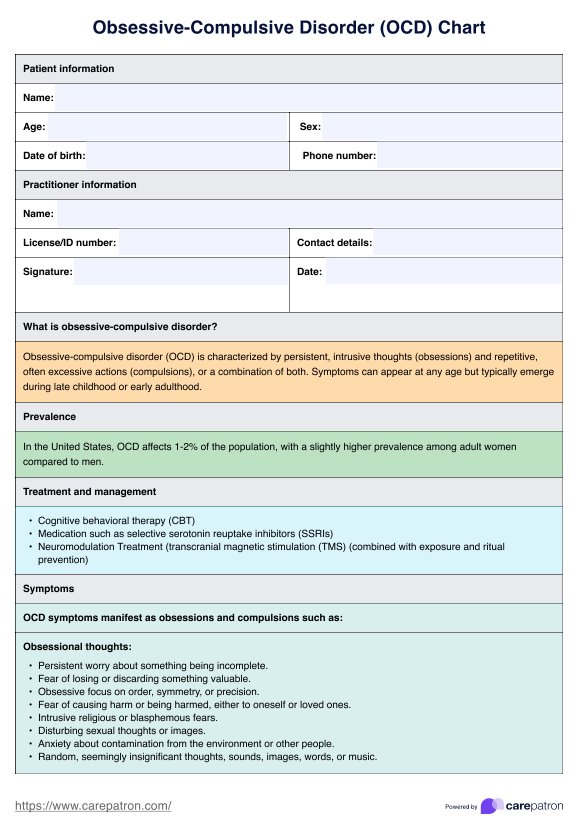




What is an obsessive-compulsive disorder (OCD) Chart?
Obsessive-compulsive disorder is a mental health condition characterized by intrusive thoughts, known as obsessions, and repetitive behaviors or mental acts, referred to as compulsions. These patterns can cause significant distress and serious impairment in daily life.
Obsessions are persistent unwanted thoughts, images, or impulses that often focus on themes such as contamination, harm, perfectionism, or morality. These obsessive thoughts create persistent worry and discomfort, driving individuals to engage in compulsive behaviors to relieve their distress.
Compulsions are repetitive actions or mental rituals aimed at reducing the anxiety caused by obsessions. Common compulsions include excessive washing, checking, counting, or arranging and mental acts like repeating phrases or prayers. While these behaviors may offer temporary relief, they often reinforce the OCD cycle, leading to further distress.
An OCD Chart is a helpful, quick reference tool for practitioners. It also offers a space to note client symptoms and triggers and record other details that support the management and treatment of OCD. This tool, along with the DSM-5 Criteria for OCD, helps streamline therapy sessions and tailor interventions to the client’s specific needs.









