




What is a pelvic exam?
Pelvic examinations may be performed to evaluate specific issues, such as pelvic pain, abnormal vaginal bleeding, vaginal discharge, or vulvovaginal symptoms like itching or irritation. These examinations often include assessing the external genitalia, vaginal walls, and cervix. They may also form part of preventive care, such as screening for cervical cancer with a Pap smear, or be conducted alongside a gynecologic procedure. To ensure patient comfort and understanding, clinicians should explain each step, including procedures like the speculum examination and bimanual assessment, before proceeding. It is strongly recommends having a chaperone present during all pelvic, breast, or rectal exams to maintain professionalism and support (The American College of Obstetricians and Gynecologists, 2024).
Pelvic examinations should be performed only when clinically indicated, based on a woman’s medical history, current symptoms, or specific concerns. Common indications include assessing pelvic organ prolapse, tenderness, or abnormal findings in the pelvis or abdomen. The decision to perform the exam should be made collaboratively between the patient and healthcare provider after discussing its purpose and benefits. For patients who decline a pelvic exam, alternative options—such as a self-collected swab for sexually transmitted infection screening—should be offered, particularly for sexually active individuals under 25 years old.
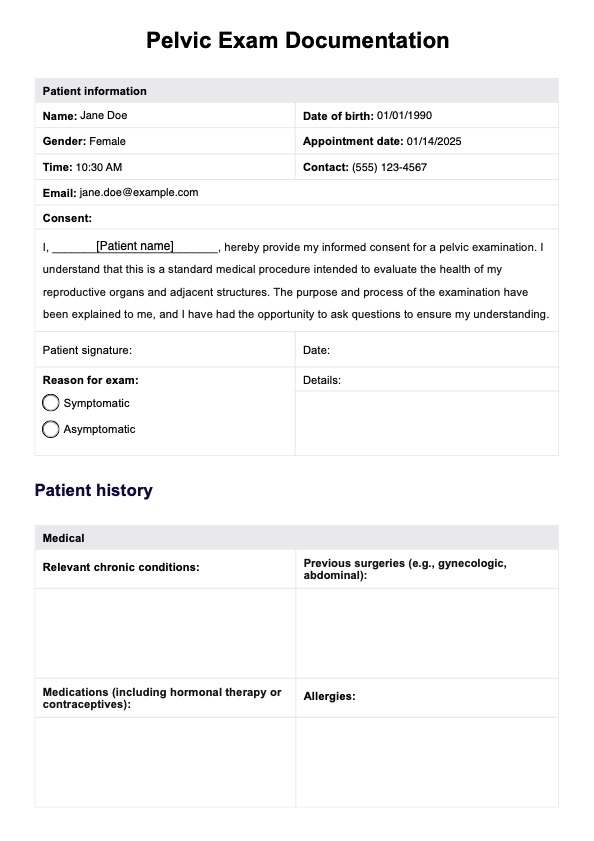
To aid in accurate and thorough assessments, we have developed a Pelvic Exam Documentation Template for healthcare professionals. This template systematically helps in recording all relevant findings, including the patient’s history, general appearance, and results from procedures like the speculum exam. It ensures high standards of care by capturing essential details such as the presence or absence of tenderness, discharge, or abnormalities, enabling effective communication within the healthcare team.









