
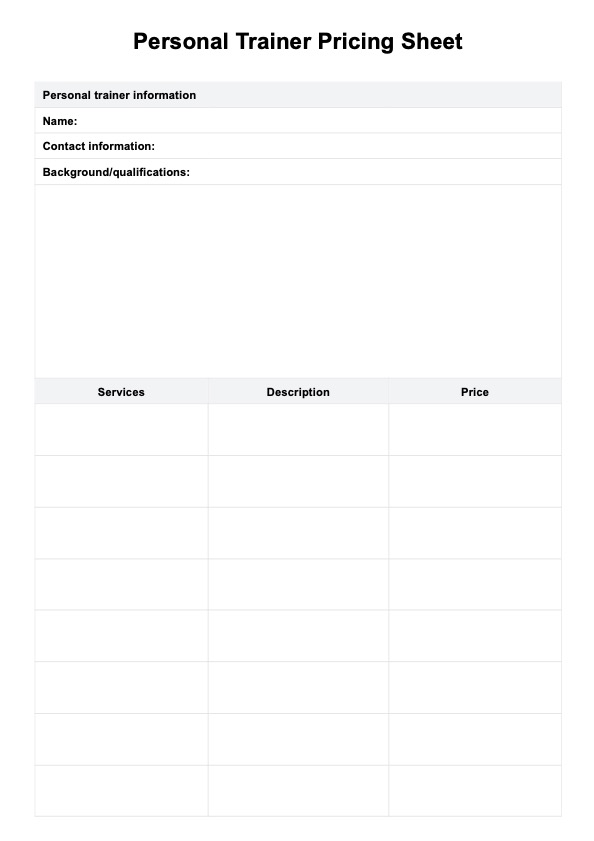




How to price personal training services
If you are a personal trainer looking to start your independent practice, one of the first things you must consider is personal training prices. While starting your fitness business gives you autonomy, it also requires commitment and hard work to sustain it. Hence, knowing pricing structures will provide you with a headstart.
Pricing structure defines how you price your products or services. Depending on your client's specific needs and preferences, you may offer various pricing options such as hourly rates, package deals, or even a subscription membership. Other than these, allow them to opt for additional services on top of the basic ones. This can include customized workout plans, dietary advice, and group classes.
Consider offering discounted rates for group training sessions or when a client avails of multiple sessions. However, don't be too overwhelmed to provide every option possible. Listing every possible membership may confuse clients. It's better to keep membership options simple.
Factors to consider when setting personal training rates
When deciding on your personal trainer cost, you need to work on the following areas:
- Target market: Consider your target clients' demographics, such as their income levels, preferences, and willingness to pay for personal training sessions.
- Cost of operations: Calculate the expenses, including rent, equipment, certifications, insurance, and marketing. This will help ensure you cover them while still achieving your profit margin.
- Market demand: Research market trends, the fitness industry, needs, and services offered by other personal trainers. Determine baseline service prices and adjust them accordingly to remain competitive.
- Unique value proposition (UVP): The personal training industry will have competitors. Hence, you have to establish a compelling, UVP that tells your target clientele about the value of your services and what sets you apart from other local competitors. Investing in marketing will also help.
- Qualifications and certifications: We all start somewhere, and investing in your qualifications and certifications is good for attracting clients. When you have a proven track record, chances are you can set higher prices based on the perceived value of your expertise.
Whether you offer in-person or online personal training, knowing these factors can help you in planning business expenses to sustain your fitness programs.









