




What are phonological processes?
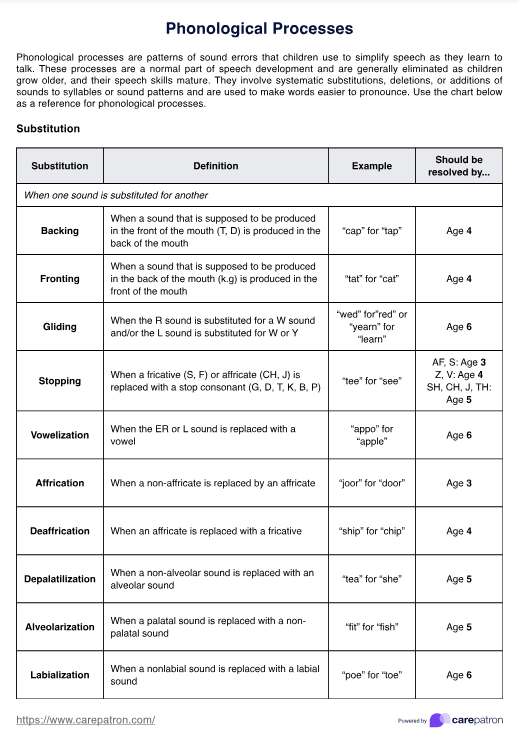
Phonological processes are patterns of sound errors that typically developing children use to simplify speech as they learn to talk. These processes are a normal part of speech development and are generally eliminated as children grow older, and their speech skills mature. They involve systematic substitutions, deletions, or additions of sounds to syllables or sound patterns and are used to make words easier to pronounce.
At what age are phonological processes eliminated?
Most phonological processes are eliminated when a child reaches 3 to 4 years old. However, some processes can persist until the child is 6 to 7 years old. For example, processes like final consonant deletion and reduplication are usually gone for most children by age 3. In contrast, processes like gliding and stopping of fricatives may persist until most children are age 5 or older.
If these processes continue beyond the expected age of elimination, it may indicate a phonological disorder that requires intervention from a speech-language pathologist.









