



Piriformis Anatomy DiagramAI Template IconToolbar IconShare Icon

Piriformis Anatomy Diagram

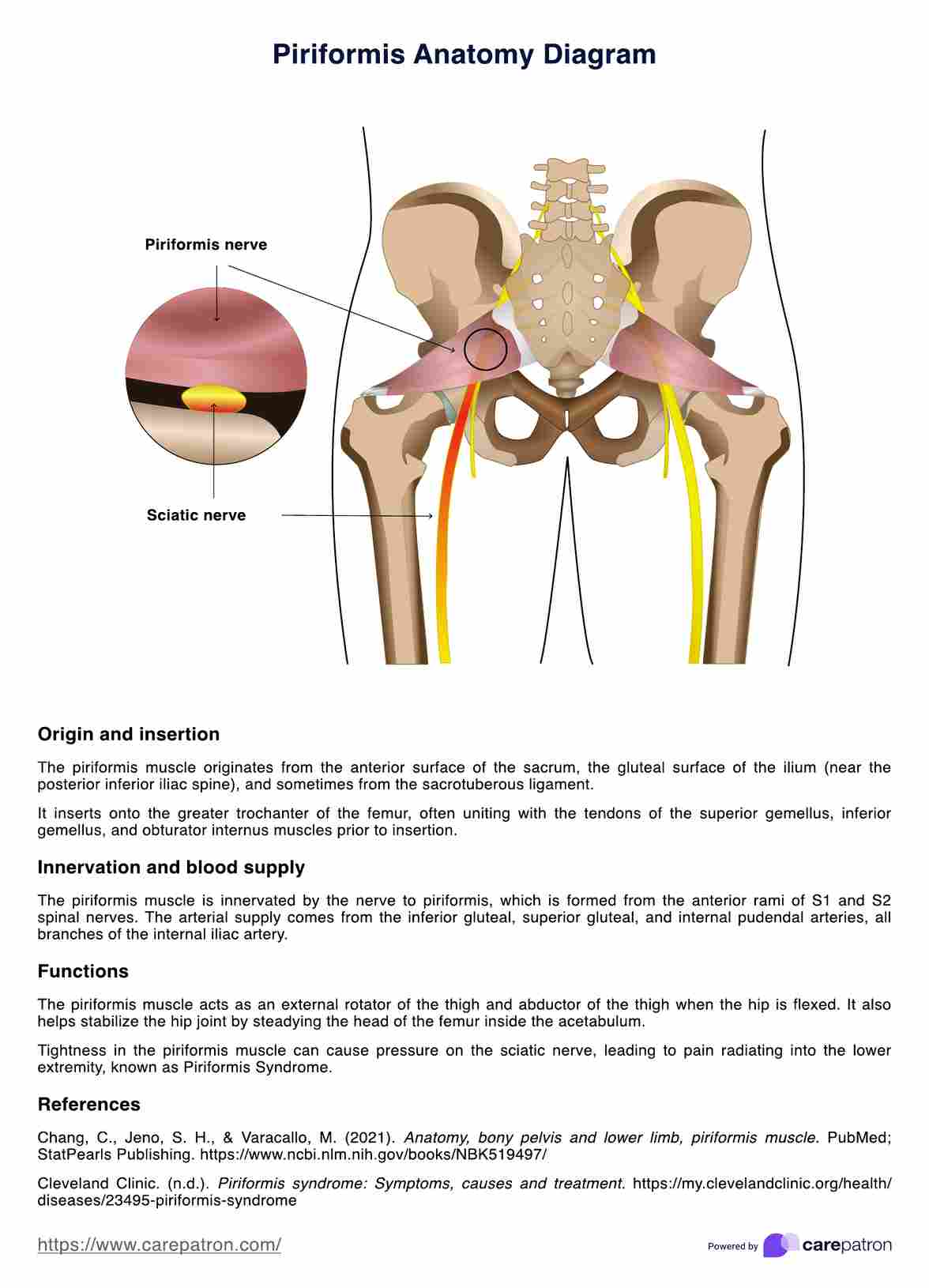
What is the piriformis muscle? How does it relate to the sciatic nerve and the gluteal region? Download our free anatomy diagram to understand this crucial muscle.

Olivia Sayson avatar

By Olivia Sayson on Aug 2, 2025.

Fact Checked by Ericka Pingol.

Use Template

What is the piriformis muscle?

The piriformis is a flat, pear-shaped muscle located deep in the gluteal region. The piriformis muscle originates from the anterior surface of the sacrum, the greater sciatic foramen, and the sacrotuberous ligament, inserting onto the greater trochanter of the femur. This muscle is responsible for external rotation and abduction of the hip joint.

Importantly, the sciatic nerve typically passes inferior to the piriformis through the greater sciatic foramen, which can lead to piriformis syndrome when the nerve is compressed. The piriformis also interacts with structures like the superior gluteal nerve, inferior gluteal nerve, and inferior gluteal artery, affecting the function and health of the hip joint and surrounding areas. It is situated near the gluteus medius and obturator internus muscles, playing a role in challenging neuropathic pain syndromes.

Piriformis Anatomy Diagram Template

Download PDF Template

How does our Piriformis Anatomy Diagram work?

Using our diagram of the anatomy of the piriformis muscle is pretty straightforward. Here are the steps you can follow to fully utilize the template:

Step 1: Download the template

Grab a copy of the piriformis muscle anatomy diagram PDF template by clicking the "Use template" button or searching for it in Carepatron's template library.

Step 2: Analyze and utilize the diagram

Familiarize yourself with the structure of the glutes and the location of the piriformis muscle. Then, use the diagram in studies or practice. Feel free to take notes in the space provided or print multiple copies to give to patients or students.

When to use the Piriformis Anatomy Diagram?

There are several ways healthcare professionals can utilize a diagram of the anatomy of the piriformis muscle. Here are some specific ones:

  • Patient education: You can use the diagram as a visual aid to understand the location prior to treatment or physical exercise recommendations.
  • Diagnostic pain: Patients can use the diagram to pinpoint the exact area where they're experiencing pain which can help during examination and differential diagnosis.
  • Documentation and record keeping: You can use the diagram to annotate or mark pain locations, trigger points, tender areas during an examination and even track changes to see if the treatment is working.

Commonly asked questions

The gluteal muscles, often referred to as the "glutes," consist of three major muscles located in the buttocks: the gluteus maximus, gluteus medius, and gluteus minimus. Each muscle plays a crucial role in various movements of the hip and thigh, contributing to activities such as walking, running, and climbing.

The piriformis muscle is a small muscle located deep within the buttocks. It extends from the anterior part of the sacrum to the upper border of the greater trochanter of the femur. It passes through the greater sciatic notch and lies beneath the gluteus maximus muscle, near the posterior margin of the pelvis.

The gluteus medius and gluteus maximus are key players in the stability and movement of the hip. The gluteus maximus is the largest and most superficial of the gluteal muscles, primarily responsible for the extension, outward rotation, and abduction of the hip. The gluteus medius, located more laterally, assists in the abduction and medial rotation of the hip and helps stabilize the pelvis during walking. The piriformis muscles work closely with these muscles to facilitate smooth and coordinated movement of the hip and thigh.

EHR and practice management software

Get started for free

*No credit card required

Free

$0/usd

Unlimited clients

Telehealth

1GB of storage

Client portal text

Automated billing and online payments







