
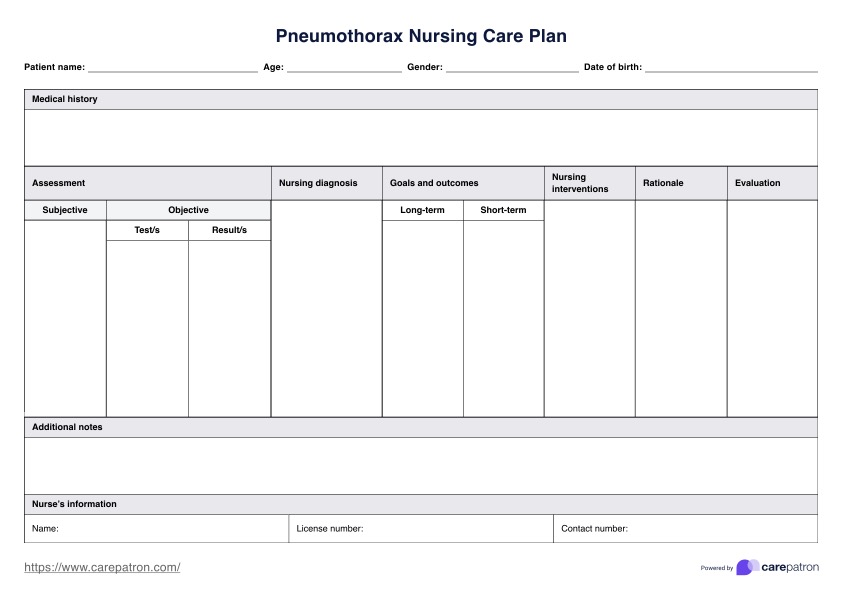




What is pneumothorax?
Normally, our lungs expand and contract smoothly as we breathe, creating a vacuum in the chest cavity that helps keep them inflated. However, when air leaks into the space between the lung and chest wall, it disrupts this vacuum and causes a collapsed lung. This is how pneumothorax occurs (American Lung Association, n.d.; McKnight & Burns, 2023).
Pneumothorax is evidenced by sudden chest pain, shortness of breath, decreased or absent breath sounds on the affected side, and chest X-ray findings of lung collapse and air in the pleural space. This condition can result from spontaneous events or trauma, and its primary causes include lung disease, medical procedures, smoking, genetic factors, and environmental influences.
Symptoms of pneumothorax
Pneumothorax presents with a variety of symptoms, ranging from mild to severe, depending on the type and extent of lung collapse. Common symptoms include (American Lung Association, 2024; Borke, 2023):
- Abnormal breathing patterns
- Bluish skin due to lack of oxygen
- Chest tightness
- Dry, hacking cough
- Fatigue and lightheadedness
- Nasal flaring
- Rapid breathing and heartbeat
- Sharp, stabbing chest pain that worsens with deep breaths or coughing
- Shock and collapse
- Shortness of breath
Recognizing these signs and symptoms, especially in conjunction with risk factors such as recent chest trauma or underlying risks in chest tubes or chest tube placement, prompts timely evaluation and management.









