
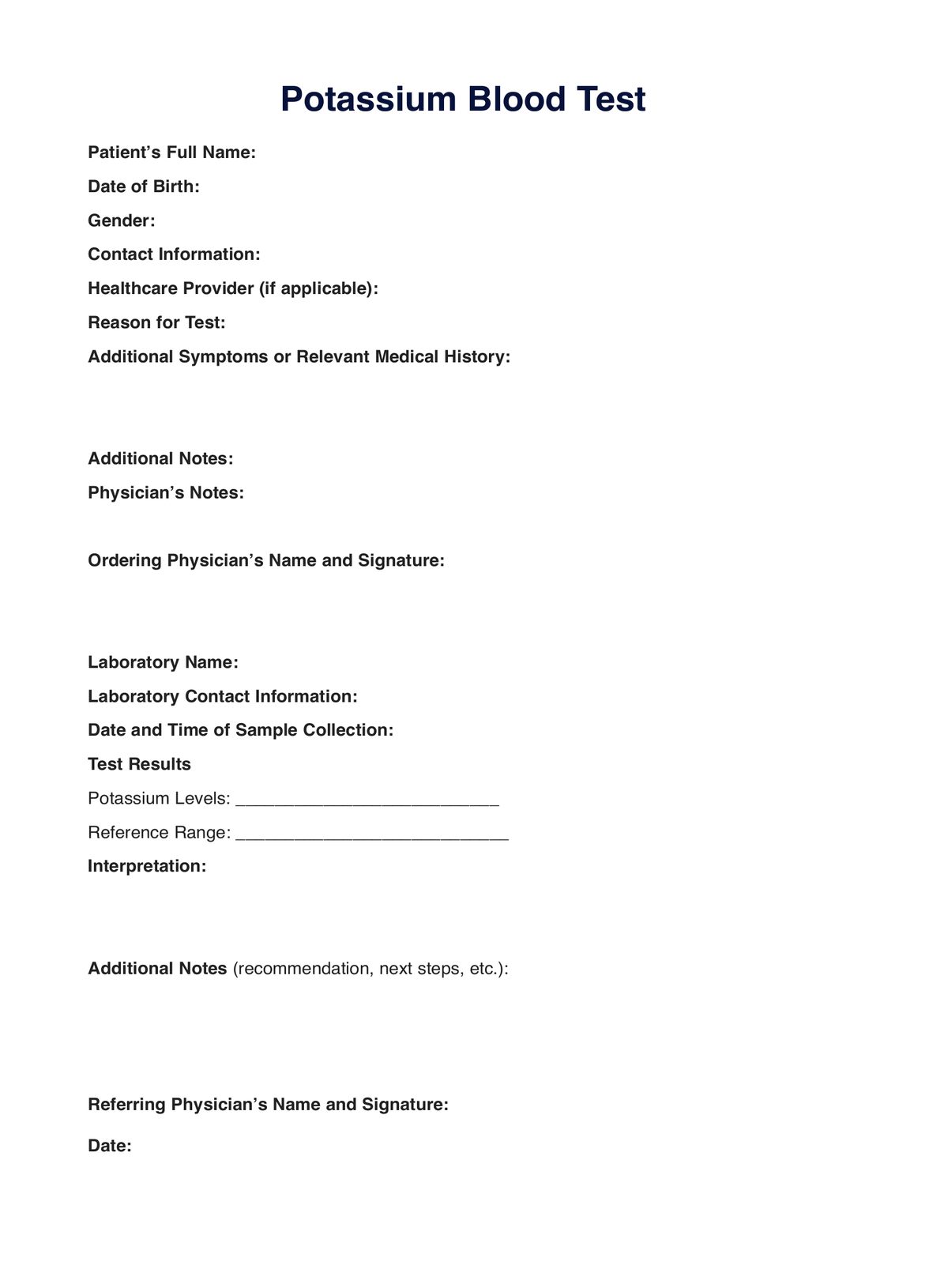




What is a Potassium Blood Test?
A potassium blood test is a medical test used to determine the concentration of potassium in an individual’s blood. Measuring one’s potassium, an electrolyte, is crucial to assessing the function of one’s nerves and muscles. More specifically, it is a tool meant to evaluate an individual’s overall health and see if they have any underlying conditions such as kidney disease, heart disease, and high blood pressure.
The potassium blood test is often incorporated into a basic metabolic panel, a series of chemical tests that measure the levels of substances like potassium, sodium, carbon dioxide, creatinine, and calcium in an individual’s blood. The procedure is similar to a basic metabolic panel, wherein the practitioner in charge will take a blood sample and process it in the laboratory. The results obtained will be analyzed by the laboratory technician and interpreted by the referring physician.
The risks and side effects of the potassium blood test are similar to other standard blood tests wherein the practitioner in charge may have difficulties locating a vein to insert the needle. Aside from that, the patient may have bleeding, bruising, lightheadedness, and the potential for fainting or infection after the test.









