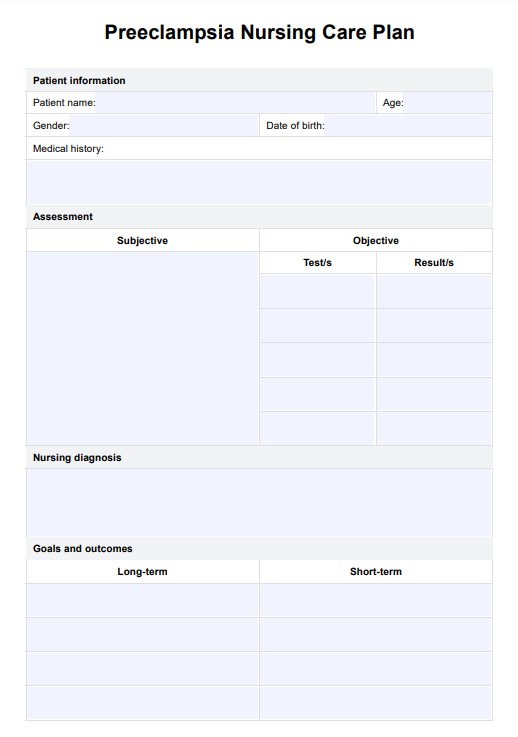
Components of an effective Preeclampsia Nursing Care Plan
An effective nursing care plan for preeclampsia is crucial to ensure the safety and well-being of both the mother and the fetus. Below are the essential components that should be included in a comprehensive nursing care plan for preeclampsia:
Assessment
The assessment phase of a preeclampsia care plan starts with a thorough evaluation of the patient’s health. This includes collecting both subjective and objective data about the patient’s medical history, focusing on any past hypertension or pregnancy complications. Nurses should regularly check vital signs, especially blood pressure, and monitor for symptoms like edema, headaches, and visual changes.
Nursing diagnosis
Based on the assessment, nurses should analyze the collected data to identify nursing diagnoses specific to preeclampsia. These diagnoses will guide the development of targeted interventions. For instance, a common nursing diagnosis for preeclampsia is “risk for injury related to hypertension and edema.”
Goals and outcomes
The next step in developing a care plan is establishing measurable goals and expected outcomes. These should be individualized based on the patient’s condition, preferences, and needs. Examples of potential goals for preeclampsia include maintaining stable blood pressure levels, reducing edema, preventing seizures, and ensuring fetal well-being.
Nursing interventions
Nursing interventions are specific actions that nurses take to achieve the established goals and outcomes. In the case of preeclampsia, these may involve administering medications, such as antihypertensives or magnesium sulfate to
Interventions or Implementation
Nursing interventions are crucial actions aimed at managing preeclampsia and promoting maternal and fetal health. This may involve monitoring vital signs frequently, educating the patient on recognizing signs of worsening preeclampsia, and ensuring adequate fluid intake.
Rationale
For effective nursing care, it's crucial to understand the rationale behind interventions. Nurses should rely on evidence-based practices to inform their decision-making. For instance, regularly monitoring blood pressure can help detect early signs of worsening preeclampsia, enabling timely interventions that may prevent complications.
Evaluation
The final component of a nursing care plan for preeclampsia is the evaluation phase. Nurses must consistently assess the patient’s response to interventions and modify the care plan as necessary. This ongoing evaluation is crucial for determining the effectiveness of the plan and making any required adjustments.