




What is procrastination?
Procrastination is the habitual delay of tasks or decisions, often resulting in stress, reduced productivity, and a sense of guilt. This behavior extends beyond simple time management issues and is frequently linked to deeper psychological factors, such as low self-esteem, perfectionism, fear of failure, or a lack of motivation. Often referred to as a quintessential self-regulatory failure, procrastination serves as a temporary escape from challenging emotions or tasks but ultimately increases long-term stress and negative consequences.
The causes of procrastination are multifaceted, encompassing both personal and situational factors. Psychologically, negative self-beliefs, uncertainty about tasks, or overwhelming expectations can hinder task initiation and progress. Additionally, uncomfortable feelings such as anxiety or frustration may contribute to avoidance, reinforcing the cycle of procrastination.
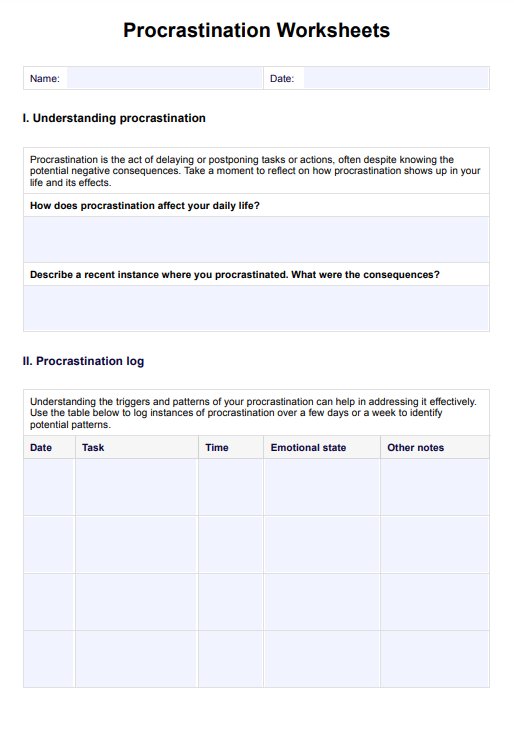
Our Procrastination Worksheets are designed as a professional resource to help individuals understand procrastination, address procrastination excuses, and develop strategies to overcome it. These evidence-based tools provide health professionals with structured activities, including reflection prompts and task initiation techniques, to identify triggers and patterns. By fostering self-awareness and implementing tailored, actionable strategies, the worksheets help individuals stop procrastinating and build productive habits, ultimately enhancing their well-being and productivity.









