
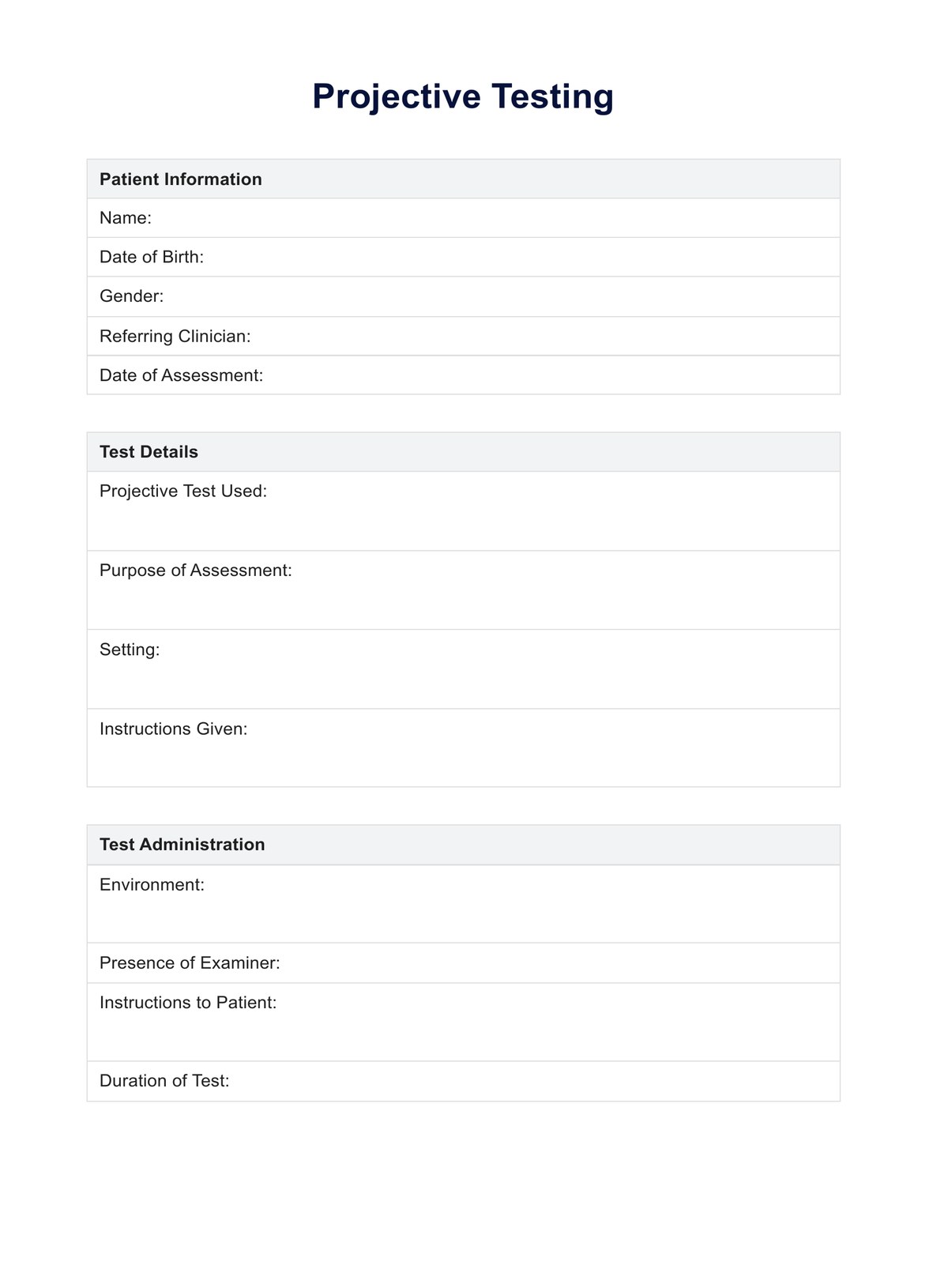




What are projective tests?
Projective tests represent a distinctive category of psychological assessments designed to delve into the hidden realms of an individual's psyche, exploring facets of thoughts, emotions, and personality that may lie beneath the surface. These tests employ ambiguous stimuli, offering subjects an opportunity to project their unconscious feelings and thoughts onto these indistinct cues. Among the notable projective tests are the Thematic Apperception Test (TAT), the Rorschach test, the Inkblot Test, and the Draw-A-Person Test. What sets projective tests apart from objective ones is their deliberate use of ambiguous scenes or stimuli, inviting test-takers to bring their subjective interpretations to the forefront.
Projective tests often lack a standardized and reliable scoring system, relying on the trained examiner's interpretation of the subject's responses. This interpretive nature allows for a nuanced exploration of personality traits, emotions, and potential psychological disorders. Despite the absence of objective testing and a concrete scoring framework, projective tests offer a unique perspective, allowing clinicians and researchers to gain valuable insights into the intricate workings of an individual's mind.
Projective tests have found applications across diverse age groups, serving as indispensable tools in clinical assessments and research endeavors. By delving into personal meanings through the interpretation of ambiguous imagery, these tests offer a rich and multifaceted approach to understanding psychological characteristics. While there may be debates about the scientific status of projective tests, their enduring value lies in their ability to uncover nuanced aspects of human behavior and provide valuable insights into the complexities of the human psyche.









