




What is Pronator Drift?
During comprehensive neurological examinations, neurologists will look for certain signs to determine what possible neurological disorder a person has. One of the signs that they will look out for is Pronator Drift.
Pronator Drift is a pathological sign that points toward palsy. It also emerges as a result of an upper motor neuron lesion, which is an injury to the brain or spine that can be the result of several conditions like cerebral palsy, stroke, traumatic brain injury, and even multiple sclerosis. It is also a sign that there is an abnormality in the corticospinal tract. The corticospinal tract is responsible for voluntary distal movements. If this tract becomes injured or compromised in some way, muscles on the side of the body become weaker and can have an increased tone, which results in the presence of Pronator Drift.
If a person has Pronator Drift, there is an involuntary rotation of their forearm and palm. They will move downward (the pronation) if they extend their arms forward and attempt to keep them in the same position for tens of seconds.
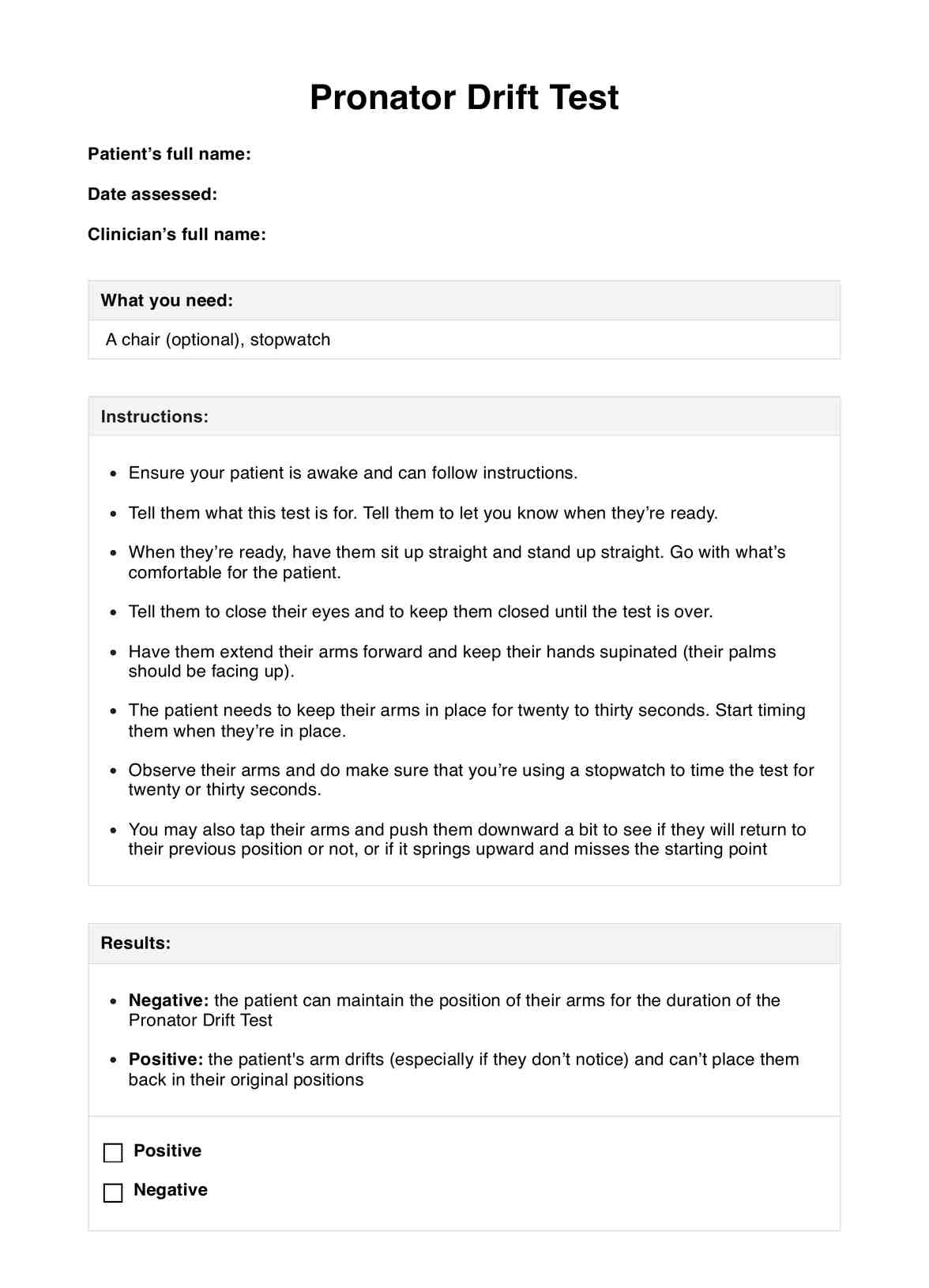
To assess the presence of Pronator Drift in patients, the was created. In the next section of this guide, you will learn how it works. It’s quite easy.









